
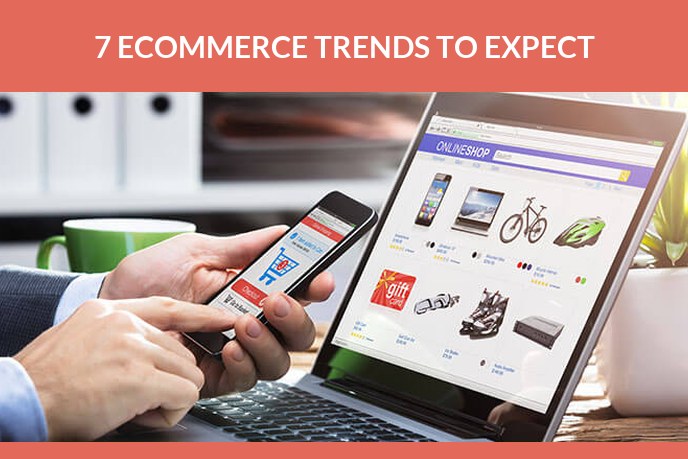
Online shopping is not the new thing anymore, it is simply where a large share of retail happens. In the first quarter of 2026 shoppers in the United States spent 326.7 billion dollars online, which is 16.9 percent of every retail dollar in the country, according to the US Census Bureau. Globally, eMarketer puts ecommerce at 20.5 percent of retail sales in 2025 and expects the total to pass 6.88 trillion dollars in 2026.
What changed over the past eighteen months is not the volume. It is the route a person takes to the buy button. People ask an assistant instead of typing a query, they meet the product in a feed instead of a category page, and they decide from a video or a 3D view instead of a paragraph of copy. Each of those routes puts a different demand on the same thing, which is your product content.
Here are seven ecommerce trends that are already measurable in 2026, the numbers behind them, and what each one asks of the images, video and models on your product pages. Some of them also happen to be the cheapest ways to increase ecommerce conversion rate without touching the price.
What is in this article
- AI became the front door to product discovery
- Social commerce keeps pulling the sale into the feed
- AR in ecommerce stopped being a demo
- Video is the format shoppers ask for first
- Personalization reaches the product, not just the banner
- Returns are where the margin quietly goes
- Marketplaces still set the rules your images have to pass
- Ecommerce trends FAQ
#1. AI became the front door to product discovery

The fastest change of the past year has nothing to do with what people buy and everything to do with how they find it. Adobe Analytics tracks visits to US retail sites that arrive from AI assistants, and that traffic grew 393 percent in the first quarter of 2026 against the same quarter a year before. It was still growing 138 percent year over year in May 2026, and counting from October 2024 it is up more than fourteen times.
It is still a small slice of total traffic, but an unusually good one. Adobe found that visits arriving from an AI source converted 54 percent better than visits from everywhere else, spent 53 percent more time on the site and looked at 23 percent more pages. Salesforce, working from data on 1.5 billion shoppers across 89 countries, put the figure for the 2025 holiday season at 262 billion dollars of online spend influenced by AI and agents, close to one order in five.
Then comes the part that concerns your catalogue directly. Adobe also measured how much retail content a machine can actually read, and the results are not flattering: 63 percent for cosmetics, 56 percent for electronics, 51 percent for apparel and for sporting goods, 48 percent for grocery, 47 percent for furniture and home. An assistant that cannot parse your specifications, your alt text and your image set will simply recommend the competitor it can parse.
The fix is unglamorous. Complete specifications, one naming system across the catalogue, alt text that names the product instead of describing the scenery, and the same set of angles for every item rather than whatever the photographer had time for. Where photography left gaps, a 3D model of the product closes them without booking another shoot.
#2. Social commerce keeps pulling the sale into the feed

Buying inside a social app stopped being a novelty a while ago. Statista counted 110 million people in the United States who bought directly through social channels in 2024, and puts global social commerce at 821 billion dollars in 2025 with a trillion in sight by 2028. Salesforce reports that 76 percent of Gen Z shoppers discover products on social media and that 39 percent have bought there.
Live selling is the piece that grew from almost nothing. Livestream commerce in the US was worth roughly 50 billion dollars in 2023 and is projected near 68 billion in 2026, which is a rounding error next to total retail and a very large number for a format that barely existed five years ago.
The practical problem with the feed is appetite. A category page needs six good images per product and then leaves them alone for a year. A social calendar needs six a week, in new settings, for the same product, with seasonal variants nobody thought to photograph in spring. Once the product exists as a model, a new scene is a render rather than a shoot, which is why brands with a heavy social schedule tend to be the first to move to CGI. We broke the workflow down in commercial product rendering for social media and in 3D models for Instagram marketing.
#3. AR in ecommerce stopped being a demo

Grand View Research values augmented reality in ecommerce at 5.8 billion dollars in 2024 and projects 38.5 billion by 2030. More useful than the market size are the merchant numbers Shopify has published. Shoppers at Rebecca Minkoff who interacted with a 3D model were 44 percent more likely to add the item to the cart and 27 percent more likely to place the order, and those who viewed a product in AR were 65 percent more likely to buy. Gunner, which sells heavy duty dog kennels, reported a 40 percent rise in order conversions and 5 percent fewer returns after adding 3D and AR to its product pages.
Treat those as merchant reported figures rather than controlled experiments, because that is what they are. The direction is consistent across cases, the size of the effect depends heavily on the category. AR earns its keep where size and fit are the reason people hesitate, so furniture, appliances, large electronics and anything that has to fit through a door benefit far more than a phone case does.
What AR asks for is stricter than what a photograph asks for. Real dimensions, correct scale, materials that hold up when the shopper walks around the object, and geometry split into parts so the model can open, rotate or change finish. A mesh generated from a few photos rarely satisfies any of that. There is more detail in AR product visualization and in our comparison of AR and VR for online shopping.
#4. Video is the format shoppers ask for first
Wyzowl has run the same survey for twelve years, so the trend line means something. In the latest round, 63 percent of people said that when they want to understand a product they would rather watch a short video than read about it. 85 percent said a video has convinced them to buy something. And 89 percent said that the quality of a video affects how much they trust the brand behind it.
That last number is the one worth pinning above the desk. A weak video is not neutral, it costs trust that the rest of the page then has to win back.
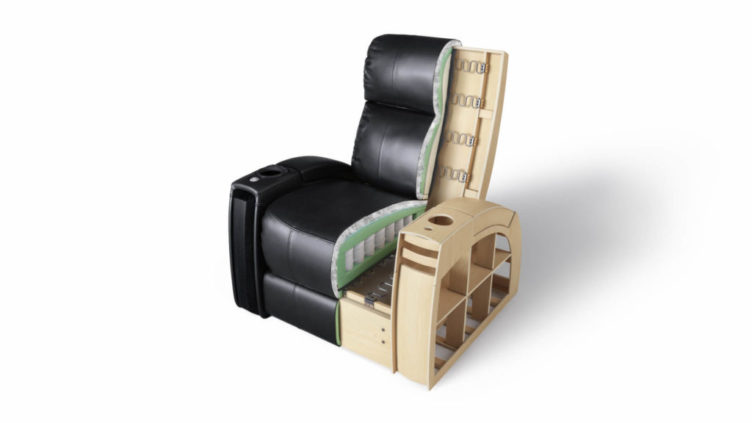
For anything with moving parts, an assembly or an inside worth seeing, film is the only honest format. A camera cannot show the inside of a food waste disposer while it runs, and an exploded view answers a question that no paragraph of copy will. When the product already exists as a model, the film comes out of the same asset as the stills, which is the cheapest way to end up with both. See product animation services and product video for ecommerce.
#5. Personalization reaches the product, not just the banner
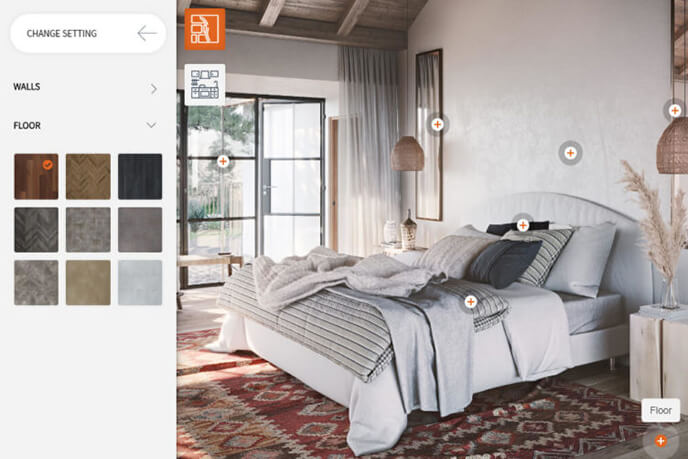
Personalized recommendations have been standard for a decade. What is new is that the product itself now changes on screen. McKinsey research is the reason brands keep pushing: 76 percent of consumers say they are more likely to consider a brand that personalizes, and 78 percent say they are more likely to buy from it again.
For physical goods this lands as configure to order. Pick the fabric, the wood, the metal finish, the length, and the page shows that exact combination instead of a strip of swatches under one photo. Photography cannot cover the maths. Twelve fabrics across four frames is 48 photo sessions, or one model with material slots.
Worth being precise about the division of labour here. We build the models that a configurator runs on, which is a different job from building the configurator itself. In practice that means clean geometry, named parts, materials that can be swapped without breaking the look, and export in whatever format the platform expects. Benefits of a 3D product configurator covers what changes on the sales side, and 3D product visualizer development covers how such a project is put together.
#6. Returns are where the margin quietly goes
The National Retail Federation put US returns at 849.9 billion dollars in 2025, or 15.8 percent of annual sales. Online the rate is 19.3 percent, so roughly one order in five comes back, gets handled twice and often cannot be resold at full price.
Before that there is the cart. Baymard Institute, averaging 50 separate studies, documents a 70.22 percent cart abandonment rate. Their breakdown of reasons is worth reading in full: 40 percent walk away over extra costs, 20 percent over slow delivery, 19 percent because they did not trust the site with a card, 13 percent over the returns policy.
Images will not fix your shipping costs. They do fix the returns that start with a wrong expectation, and those are the expensive ones. The colour that looked warmer on screen, the chair that turned out lower than it seemed, the finish that read as matte and arrived glossy. Accurate materials, a visible scale reference and a 360 view remove most of that guesswork before the order is placed. We went into it in realistic 3D product modeling and returns and in 360 product photography for ecommerce.
#7. Marketplaces still set the rules your images have to pass

Whatever AI and social do to discovery, a large share of online buying still passes through a handful of marketplaces, and each of them keeps an image rulebook that is not open to discussion. Amazon wants the main image on pure white, RGB 255 255 255, with the product filling about 85 percent of the frame, at least 1,000 pixels on the longest side and 1,600 or more for zoom to work at all. Miss one of those and the listing quietly stops being shown.
Rules like that are trivial to hit with a render and awkward with a photograph. The background is pure white by construction rather than by retouching, the framing is decided in the camera settings, and the same product can be exported again at whatever resolution the next marketplace asks for. Our full breakdown sits in Amazon image requirements, and Amazon 3D rendering covers what else the model earns once it exists.
Read together, the seven trends ask for the same thing from seven directions. AI needs your catalogue to be legible. Social needs volume. AR and configurators need a real model with real dimensions. Video needs something that moves. Marketplaces need exact frames. All of that comes out of one asset, built once and reused, which is a 3D model of the product.
That is the sequencing worth arguing for when the next budget is planned. Build the model first, and everything downstream stops being a shoot and becomes a render. Our 3D product visualization and guide to diversifying ecommerce product images are the practical next steps.
Want photorealistic imagery for your online store, or models ready for AR and configurators? Get in touch for 3D modeling and rendering services and put these ecommerce trends to work on your own product pages.
Ecommerce trends FAQ

Catherine Paul
Content Writer, Editor
Catherine is a content writer and editor. In her articles, she explains how CGI is transforming the world of architecture and design. Outside of office, she enjoys yoga, travelling, and watching horrors.
Let us know if you’ve got an interesting project and want to work together!