
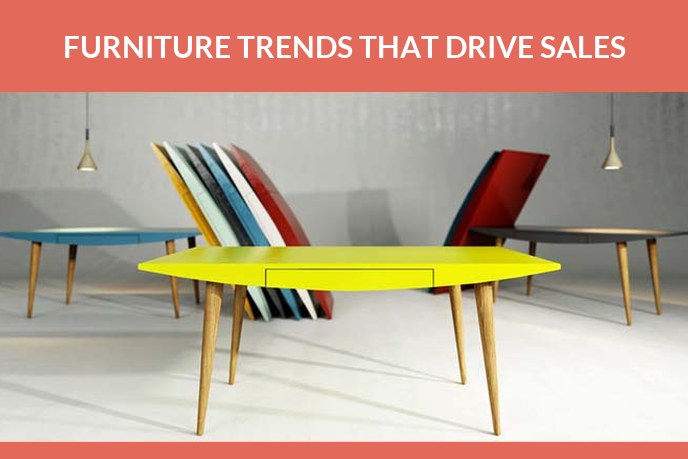
Two things decide how a furniture brand does in 2026, and neither of them is the shape of the arms. The first is landed cost, which tariffs rewrote in October 2025 and then left at that level for the whole year. The second is that a sofa is now chosen on a phone and only confirmed in a showroom, if a showroom is visited at all.
Below are six furniture industry trends shaping the year, each with the numbers behind it and what to do about it. The design direction comes last on purpose: in a year when orders are flat and prices are up, the commercial pressures decide more than the silhouette does.
What is in this article
- Tariffs rewrote landed cost and stay at 25 percent through 2026
- Orders are flat, so growth comes out of someone else’s share
- Buyers have not stopped, but price is the first objection
- Made to order turned into a margin strategy
- The product page is the showroom, and a machine reads it first
- What 2026 looks like: quiet white, one loud colour, no straight lines
- Furniture industry trends FAQ
#1. Tariffs rewrote landed cost and stay at 25 percent through 2026
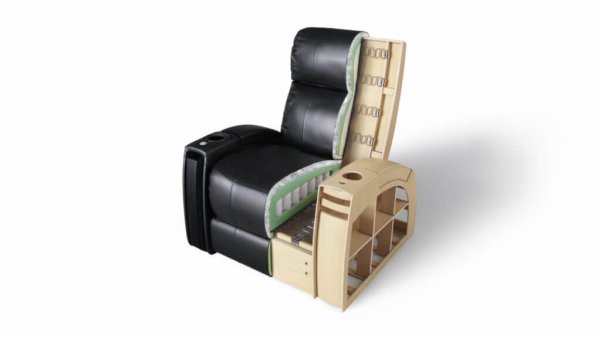
The single biggest change to the economics of this business did not come from consumers. On 29 September 2025 a Section 232 proclamation put tariffs on timber, lumber and derivative wood products, and from 14 October 2025 they applied to imports of upholstered wooden furniture at 25 percent, kitchen cabinets and bathroom vanities at 25 percent, and softwood at 10 percent. The Home Furnishings Association also noted there was no exemption for goods already on the water, so shipments in transit were caught as they landed.
Those rates were scheduled to jump on 1 January 2026, to 30 percent on upholstered furniture and 50 percent on cabinets and vanities. A proclamation signed on 31 December 2025 pushed that increase back a full year, to 1 January 2027, while negotiations continue. So 2026 is being traded at 25 percent, with a known step change waiting at the end of it. The UK, the European Union and Japan are capped at 10, 15 and 15 percent under their trade agreements.
Two practical consequences. First, sourcing decisions made in 2024 are now wrong for a lot of ranges, and quoting has to be done on true landed cost rather than on a price list. Second, the retail price of an imported sofa went up without the sofa getting any better, which means the presentation around it has to work harder to justify the number. That is not a marketing platitude, it is what the rest of this article is about.
#2. Orders are flat, so growth comes out of someone else’s share
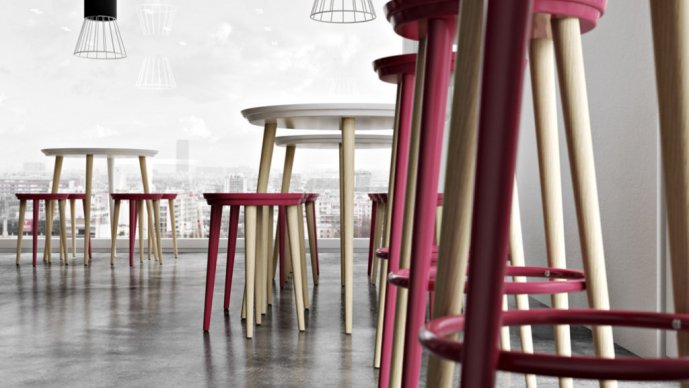
Smith Leonard publishes the monthly survey that the industry actually watches, and the picture it paints is a market treading water. In its May 2026 Furniture Insights, new orders in March were down 2 percent against March 2025 and flat year to date. Shipments were up 2 percent for the month but still down 1 percent year to date. Inventories were 4 percent higher than a year earlier. The report describes conditions as uneven and lacklustre.
Flat is not a catastrophe, but it changes the maths. In a growing market a brand can stand still and still book more revenue. In a flat one, every additional order comes out of a competitor’s ledger. That is a different job: it rewards whoever makes the decision easier for a buyer who is already shopping, rather than whoever shouts loudest at people who are not.
Practically, this is why presentation budgets survive cuts that product development budgets do not. A better catalogue converts demand that already exists. We went through the mechanics of that in how to increase furniture sales and furniture store marketing.
#3. Buyers have not stopped, but price is the first objection
The demand side is more encouraging than the order books suggest. In the 2026 Houzz Renovation Plans Report, published in December 2025, more than nine in ten homeowners, 91 percent, said they would go ahead with their planned renovation projects in 2026, and 67 percent of those renovating said they were keeping or expanding the scope of the work.
The catch is what they expect to fight with. Rising product and material costs were named by 63 percent as the challenge they anticipated, ahead of labour costs at 31 percent. So the customer has not disappeared and has not downgraded the project. They have simply arrived at every purchase with price at the front of their mind, which is exactly the position tariffs put the industry in.
What wins in that conversation is not a discount, it is evidence. A buyer paying more than they expected wants to see the joinery, the weave of the fabric, the finish under natural light and the piece in a room that looks like theirs. Photography gives you one set of those and a repeat shoot for every variant. See product shots versus lifestyle images for furniture for how the two formats split the work.
#4. Made to order turned into a margin strategy
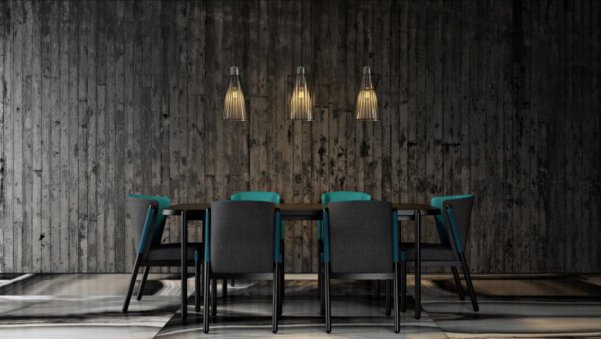
Configure to order used to be the top of the range. It is turning into a way to hold margin. If a customer picks the fabric, the wood and the size, the piece is sold before it is built, the discounting pressure drops because the item is not directly comparable to a competitor’s, and inventory does not sit in a warehouse at a time when stock is already 4 percent heavier than last year.
The barrier has always been visuals. Twelve fabrics on four frames is 48 photographs of furniture that does not exist yet. That maths is why configurators stalled for years and why they work now: one 3D model with material slots covers every combination, and the same model feeds the room scene, the marketplace listing and the AR view.
Worth being precise about who does what. We build the models a configurator runs on, with clean geometry, named parts and swappable materials, rather than the configurator software itself. Benefits of a 3D product configurator covers the sales side, 3D product visualizer development covers how such a project is assembled, and furniture 3D modeling covers what we deliver.
#5. The product page is the showroom, and a machine reads it first
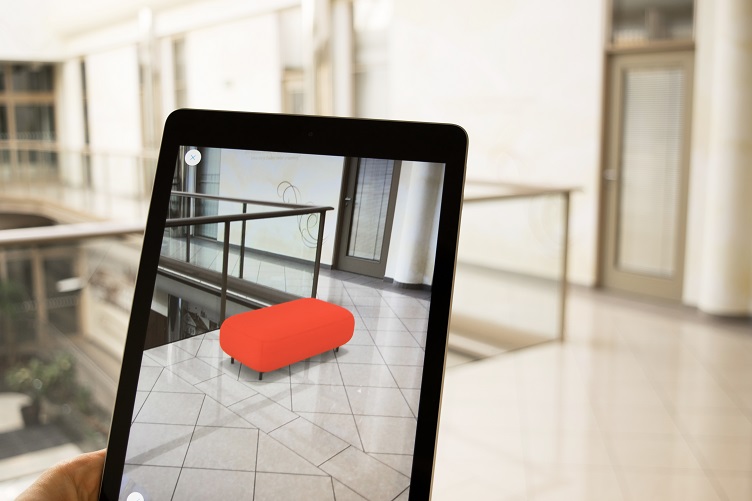
Two things happened to the furniture product page at once. The obvious one is that it replaced the showroom for the first half of the decision. The less obvious one is that it now has a second audience.
Adobe measured how much retail product content is machine readable, meaning legible to the AI assistants that a growing share of shoppers now ask before they search. Furniture and home came last of the categories measured, at 47 percent, behind cosmetics at 63 and electronics at 56. Since traffic arriving from AI assistants converts better than traffic from anywhere else, being the catalogue an assistant cannot parse is an expensive place to sit. There is more on that shift in ecommerce trends and the future of ecommerce.
Then there is the money leaking out the other end. The National Retail Federation put the online return rate at 19.3 percent of sales in 2025, and furniture is the category where a return is most painful, because it is bulky, often damaged in transit and rarely resold at full price. Baymard Institute, averaging 50 studies, documents a 70.22 percent cart abandonment rate before that.
Both problems have the same root: the customer cannot tell what they are getting. Consistent angles across the catalogue, accurate materials, a visible scale reference and an AR view that puts the piece in the actual room remove most of the guesswork. AR product visualization and realistic 3D modeling against returns go into the detail, and ten ways to diversify product images covers the shot list.
#6. What 2026 looks like: quiet white, one loud colour, no straight lines
Now the part everyone actually asks about. Three signals are worth planning a range around.
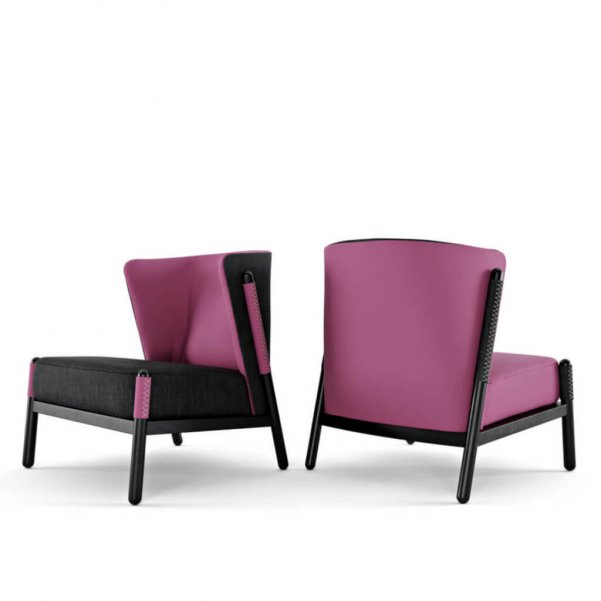
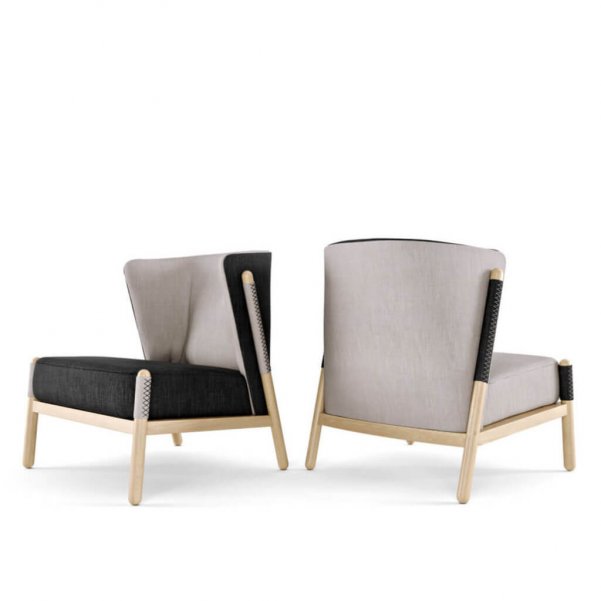
Colour has gone quiet, with one loud exception. Pantone named PANTONE 11-4201 Cloud Dancer its Colour of the Year 2026, a soft white and the first white in the programme’s history. At the same time IKEA built part of its 2026 style guide around Rebel Pink. Read together, the direction is a calm envelope with one deliberate piece doing all the talking, which is good news for anyone selling accent chairs and awkward for anyone whose whole range is beige.
Straight lines keep losing. Houzz reports that rounded silhouettes and wave-like details, already established in furniture, are now spreading into architectural features as homeowners move away from rigid lines. Curves have been building for several seasons and show no sign of turning; they are also the shapes photography handles worst and rendering handles best, since a curved form lives or dies on how light rolls across it.
Materials have to look honest. With prices up, surfaces get inspected. Warm woods with visible grain, textured weaves and matte finishes all read as worth the money in a way that flat gloss does not, and all three demand imagery that shows texture at close range rather than a catalogue shot from three metres away.
None of this is exotic. The practical question is whether your catalogue can show it. If a new finish takes a photo shoot and six weeks, you will always be a season behind the trend you are trying to sell. If it takes a material swap on a model you already own, you are not. That is the argument for furniture 3D rendering in a year when the range has to move faster than the production line.
Put together, 2026 is a year of pressure rather than collapse. Costs are up and locked in until at least January 2027, orders are flat, and the customer is still buying but arguing about price. Nothing in that list is fixed by a better ad. It is fixed by making the product easier to judge and easier to say yes to, which is a content problem before it is a marketing one.
If your range has to look current, configurable and convincing without a photo shoot for every variation, that starts with a model of the product rather than a picture of it. Our furniture 3D modeling services and 3D product rendering services are where those projects begin, and furniture advertising ideas covers what to do with the visuals once they exist.
Furniture industry trends FAQ

Irma Prus
Content Writer, Copywriter
Irma has been writing for UFO3D for 7 years. She is a CGI-specialized copywriter who enjoys exploring CGI news, is obsessed with the green color and firmly believes into chocolate mint sweets supremacy.
One Comment on “FURNITURE INDUSTRY TRENDS: WHAT CHANGED AND WHAT SELLS IN 2026”
Vital information for me. Thanks! But wanna remark on some general things, The website style is wonderful, the articles is really
excellent : D. Good job, cheers