
Contents
Search for 3D advertising and you get two completely unrelated businesses sharing a name. One is a media buy. The other is a film. Knowing which one you are asking about decides who you should be talking to, so that is where this page starts.
The phrase means two different things
| Anamorphic 3D billboard | CGI ad | |
|---|---|---|
| What it is | A curved LED screen showing content built to look three dimensional from one viewing point | A film in which the product, the street or the whole stunt is built in 3D |
| Where it lives | A physical site in a city | Social feeds |
| What you buy | Screen time from the media owner, plus the content | The content only |
| Who you call | An out of home media agency | A CGI studio |
| Main cost | The placement | The production |
So yes, 3D billboards exist, and the good ones are genuinely striking. But they are a media purchase on somebody else’s screen, and the screen is the expensive part. That is not what a studio sells, and it is not what most people who search this phrase actually want.
The CGI ad that never happened
The format that took over the category is the fake out of home ad, usually shortened to FOOH. A film shows something impossible happening in a real city: a product the size of a building, a vehicle carrying an object that could not fit on it, a landmark rearranged. Nothing was installed. It was rendered.
According to Marketing Brew, the term was coined by CGI artist Ian Padgham of the production company Origiful, who pronounces it faux. Padgham made the Maybelline films of mascara wands at London Tube stops and purple buses on Broadway. The hot sauce brand Truff put a giant bottle on a yacht and ran an activation on the Las Vegas Sphere. Burberry, Gucci, Jacquemus, Adidas and Mattel have all used the format.
The appeal is easy to state. Truff co founder Nick Guillen put it plainly in that piece: with CGI you skip having to spend a lot of money running a yacht and wrapping it.
Why brands make them
- No permit, no crew, no weather. The production risk of a physical stunt disappears, and with it most of the reasons stunts get cancelled.
- The impossible is the same price as the possible. A bag the size of a bus costs no more to render than a bag the size of a bag, which is the entire creative engine of the format.
- A reshoot is a re render. Changing the city, the colourway or the product does not mean going back on location.
- It is built for the feed. Vertical, short, silent, and designed to be screenshotted. A real installation photographs well by luck. This one is composed for it.
The drawbacks nobody puts in the case study
- The novelty is spent. In 2023 audiences were fooled and delighted. Now the comments identify the CGI within seconds, and a film whose only idea is that it looks real has no idea left.
- Being caught pretending costs more than it earns. Brands that let people believe an installation was real and then got found out spent the following week explaining themselves. Labelling it is not the weakness. Hiding it is.
- It sells attention, not comprehension. A giant mascara on a train tells you nothing about the mascara. If the buyer needs to understand a product rather than notice it, this is the wrong format and a demonstration is the right one.
- Virality is not a plan. The famous examples are the survivors. Plenty of competent FOOH films get a few thousand views, and the ones that travel usually had a real idea rather than only a big object.
- Physics is the tell. Weight, contact shadows and how the object disturbs the world around it are what break these films, and they are the expensive part to get right.
The unglamorous 3D advertising that pays the bills
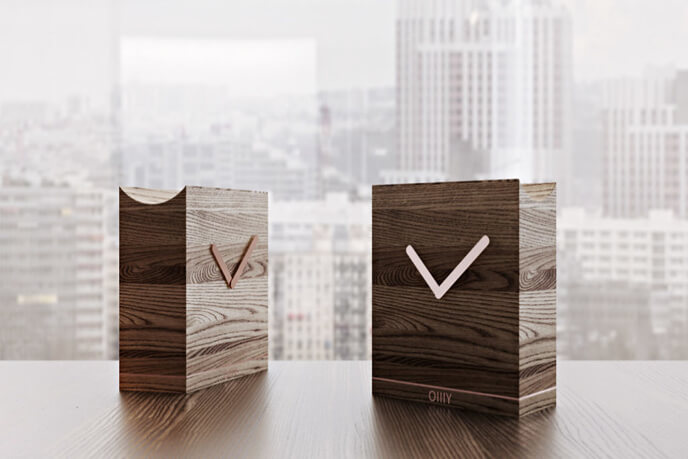
No stunt, no virality. A product rendered for an ad unit, in a setting that was never photographed.
Underneath the viral tier sits the format that most of the money actually goes into: ordinary advertising where the product is rendered rather than photographed. Display banners, paid social, print, packaging mockups, catalogue and retail media. Nobody writes an article about it, and it is the reliable half of this business.
What it buys you is control. Every image is the same product in the same finish under the same light, which a photographic campaign shot across several days cannot promise. Variants, seasons and market specific versions come off the same model instead of a second shoot.
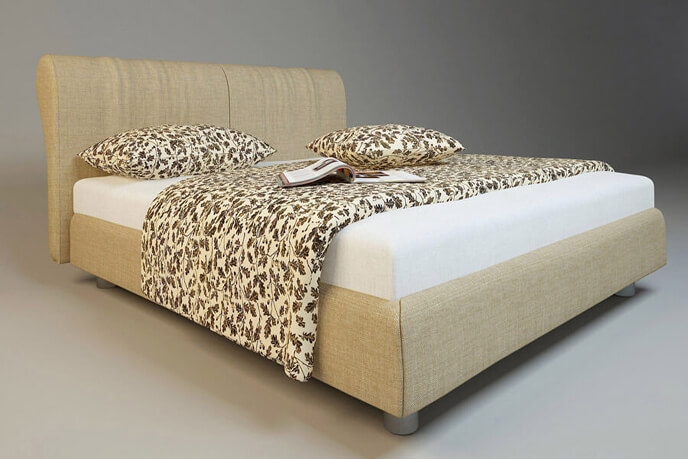
The same model produces every colourway and every crop the media plan asks for.
The pieces of this are covered separately: 3D product images for the stills, and animated product video for the moving formats.
What a 3D ad costs
| What you are commissioning | What drives the price |
|---|---|
| The model, if it does not exist | Complexity of the product and whether you have CAD. Usually the largest single line on the first job |
| Still ad visuals | Number of scenes and crops, not number of files |
| A short film | Priced by the second of finished footage |
| A FOOH style film | The plate, the tracking and the simulation. This is where the hours go, not on the product |
| Variants | Cheap after the first, because the model and the scene are reused |
Our published rates: modeling is billed at 20 dollars an hour, with a typical product landing around 200 dollars, and animation is priced per second of finished film, 30 dollars a second for straightforward camera work and 60 for a standard product animation. Effects heavy shots, which is what most FOOH work is, are quoted from the script because simulation time does not scale with the length of the shot. The reasoning behind that is in 3D animation cost.
What to decide before you commission one
- Which of the two you actually want. If the answer involves a physical screen in a named city, your first call is a media agency, not a studio.
- Whether the audience should know it is CGI. Decide it deliberately and early, because it changes the edit and the caption, not just the legal line.
- What the film has to prove. Attention and comprehension are different jobs and they produce different films.
- Where it runs. A vertical social cut, a display banner and a print page are three different crops, and deciding late means re rendering.
- What happens after the first one. If there will be a second, the model should be built for reuse from the start. The renders and films those campaigns run on are priced on our 3D product rendering services page.
FAQ
If you are weighing a CGI ad, tell us what the film has to achieve and where it runs. If what you actually need is a screen in a city, we will say so, because that is not a job for a studio.

Ian Diev
Content Writer, Editor
Ian loves writing about innovative 3D technologies and their impact on architecture and design. In his spare time, he makes indie music, watches obscure movies, and cooks culinary masterpieces for friends.