
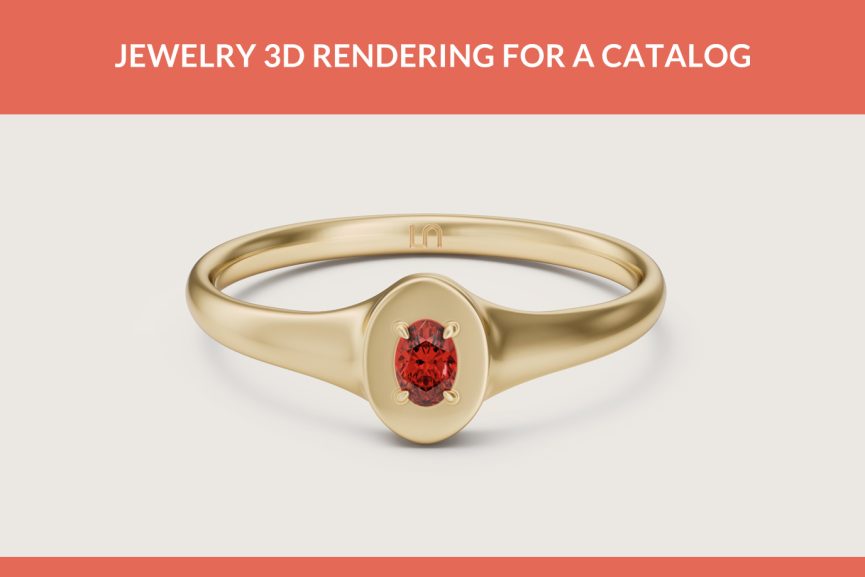
How do you sell an engagement ring worth thousands of dollars that does not exist yet? A real product listing with an Add to Cart button, variant selectors for eleven stone shapes, and images convincing enough to make someone spend that money on something that will not be manufactured until after they pay.
That is the operating reality of made-to-order jewelry. You cannot photograph what has not been made. Lindelli, a lab-grown diamond brand out of Sydney, needed a product catalog that could show every option before a single piece was crafted. Over 200+ rendering projects, UFO3D became the production line behind that catalog: CAD files in, Shopify-ready images out, a week per assignment.
About the client
Lindelli is an Australian fine jewelry brand specializing in lab-grown diamonds. It operates an atelier in Sydney and a boutique in Brisbane. Prices range from roughly A$1,200 to A$25,000 and above. The catalog covers engagement rings (solitaire, trilogy, halo, bezel, east-west) along with wedding bands, eternity bands, pendants, bracelets, earrings and necklaces across collections like Modern Icons, Interval, Cadre, Bloom and Melt.
Every piece is made to order. A customer picks a style, selects a stone shape and metal, and the ring is handcrafted in Sydney over three to four weeks. Nothing sits in a warehouse. The Shopify store is the showroom, and 3D rendering for jewelry like this is how the showroom gets stocked: images are the only version of the product the buyer sees before committing.
The catalog challenge
1 / 6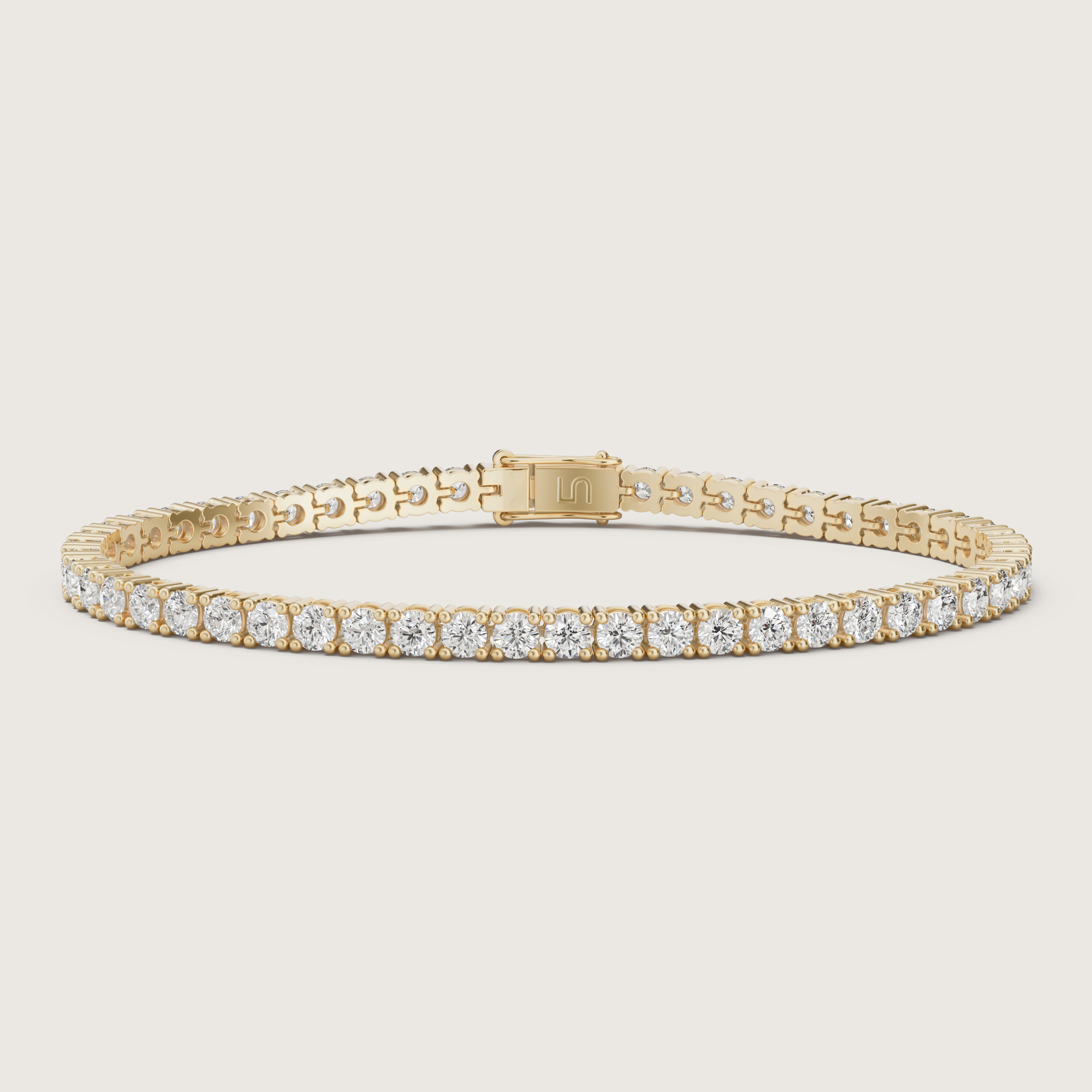
Classic Square Set tennis bracelet in yellow gold.
2 / 6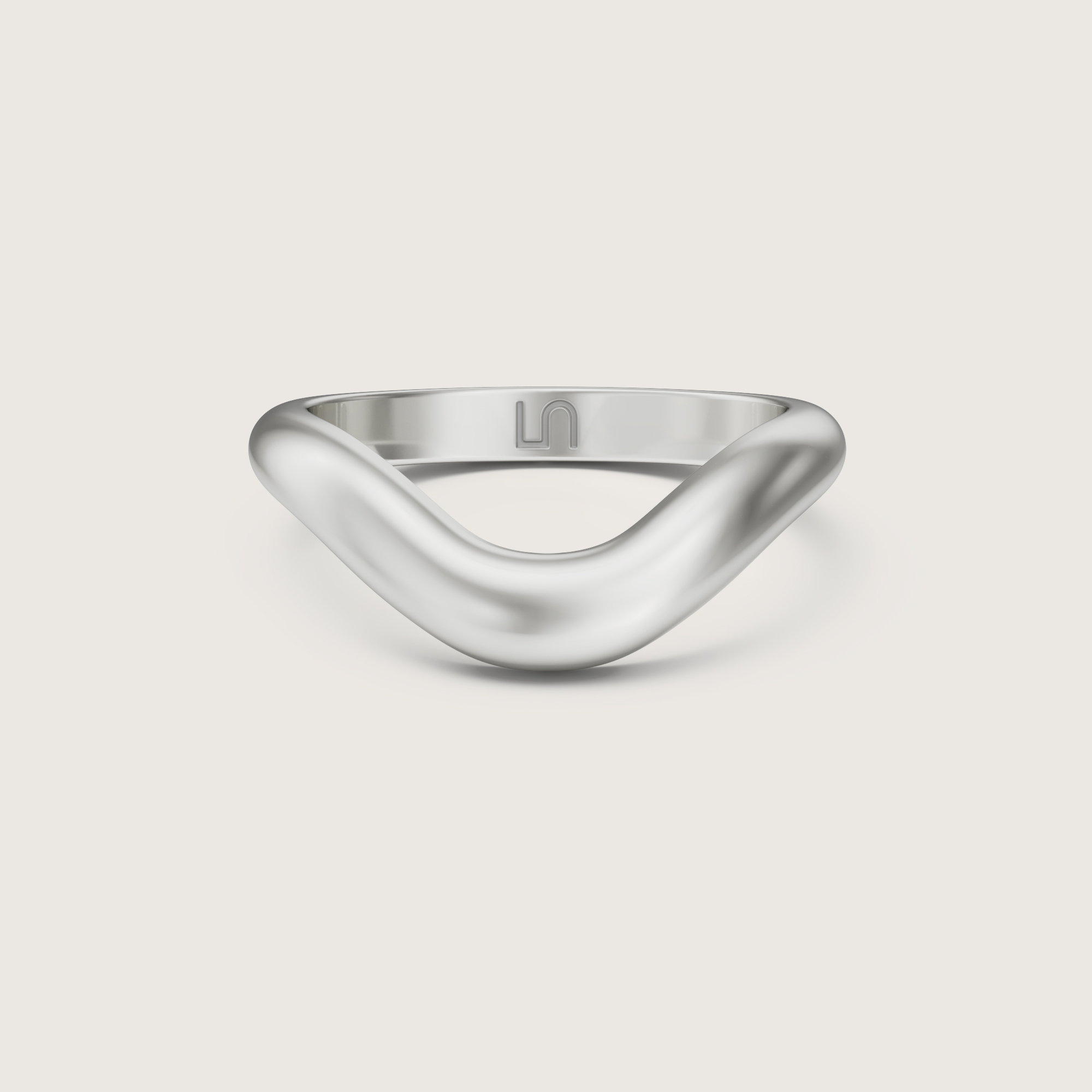
Mimi curved wedding band in white gold.
3 / 6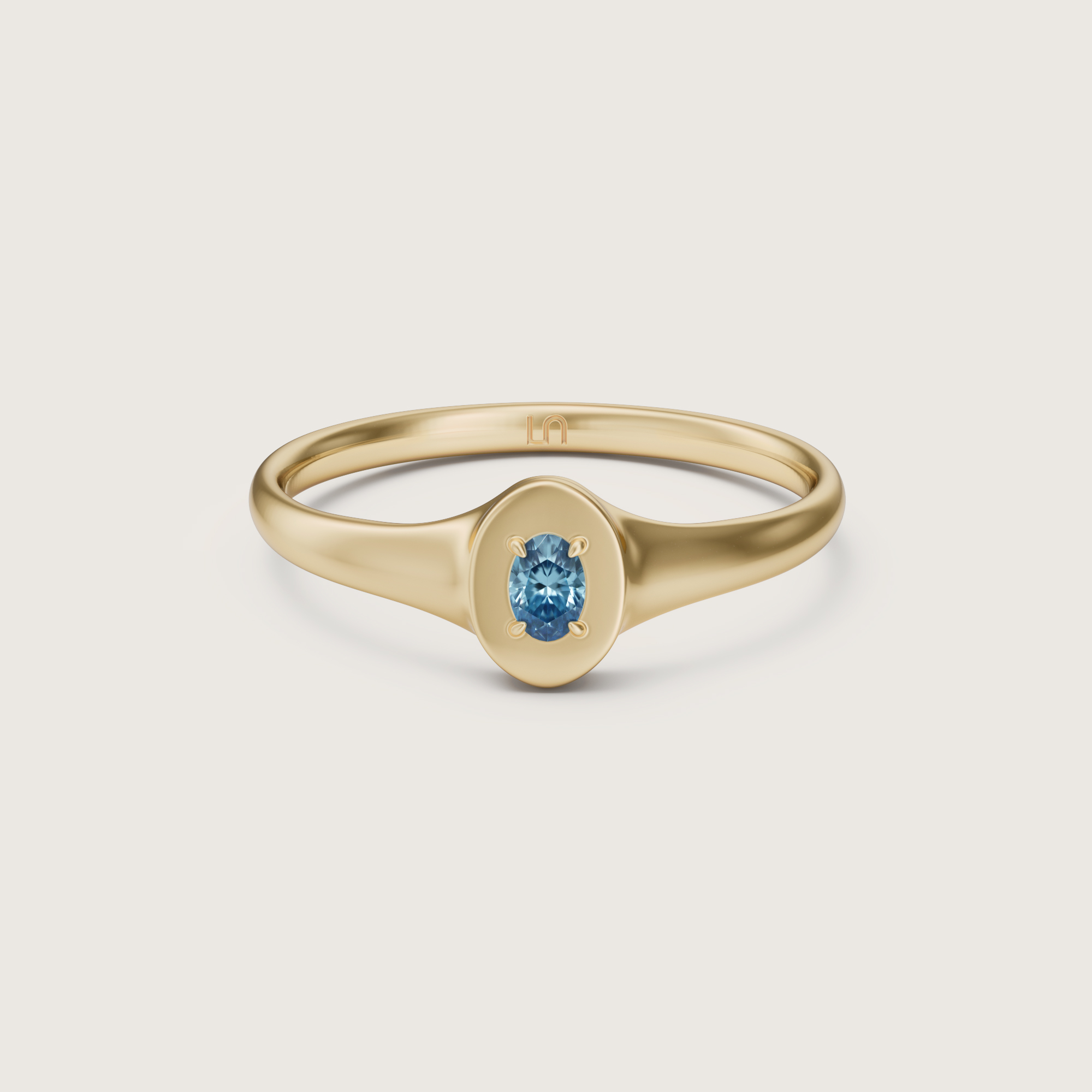
Birthstone Mini Signet ring with oval aquamarine.
4 / 6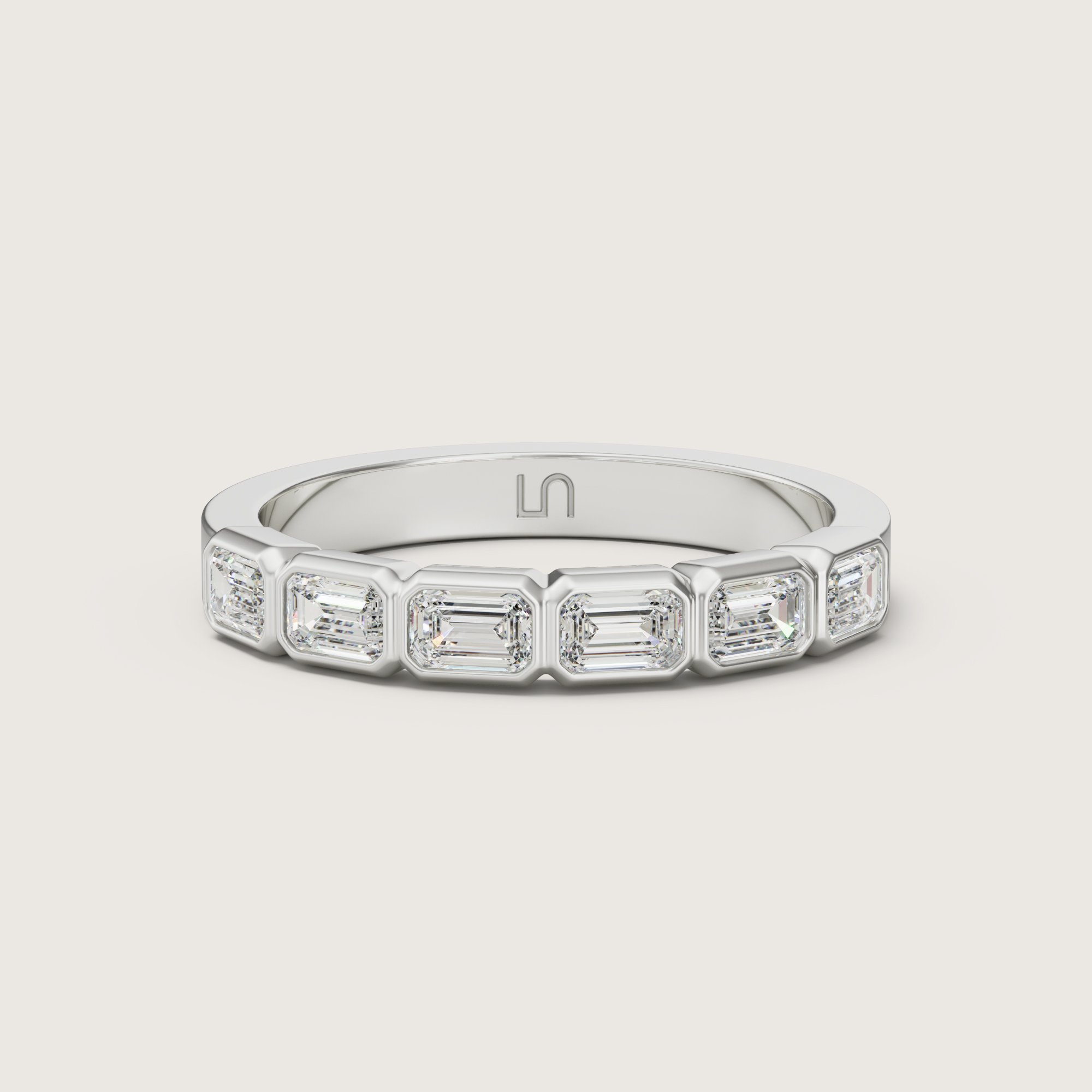
Domino emerald-cut diamond band in white gold.
5 / 6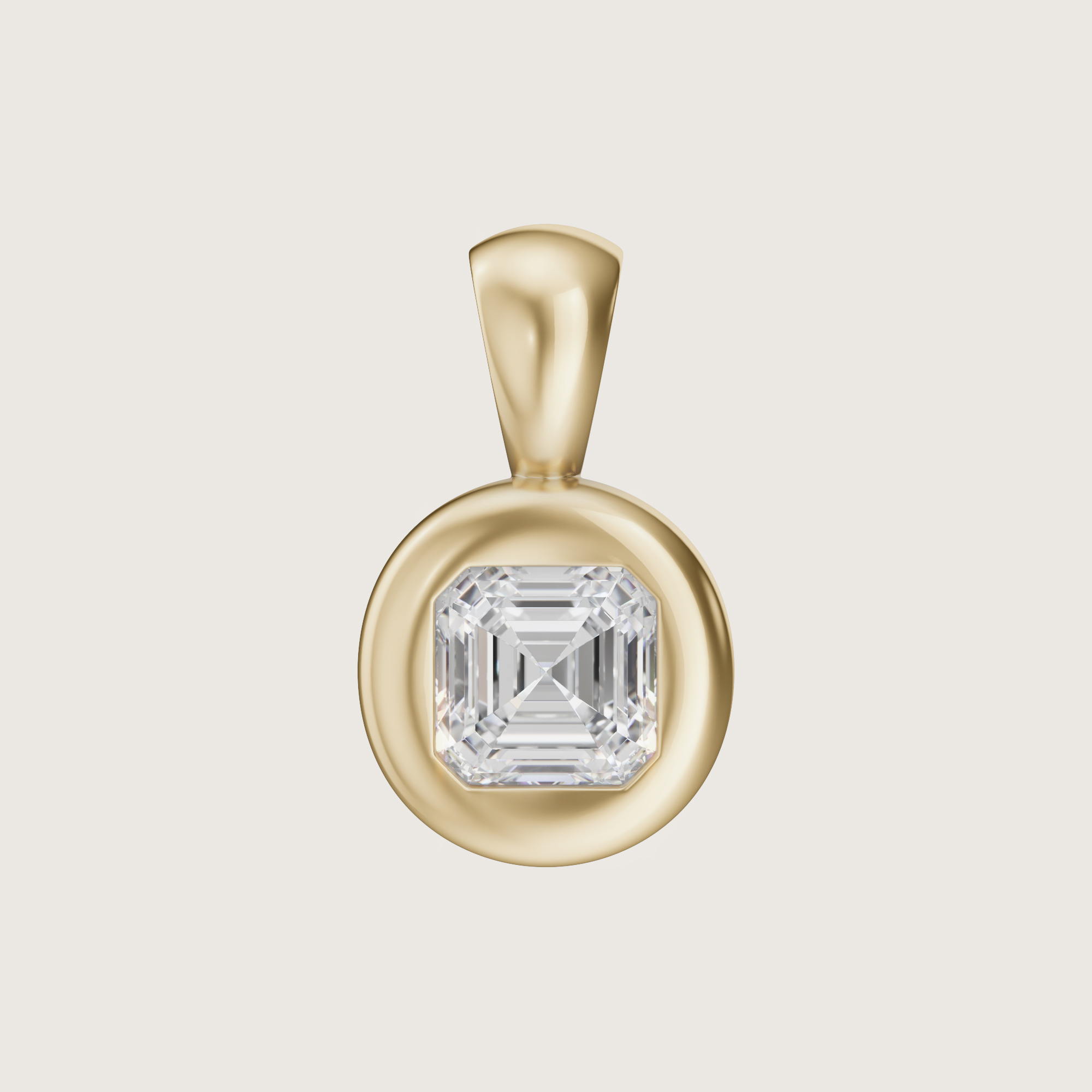
Forma pendant with asscher-cut diamond.
6 / 6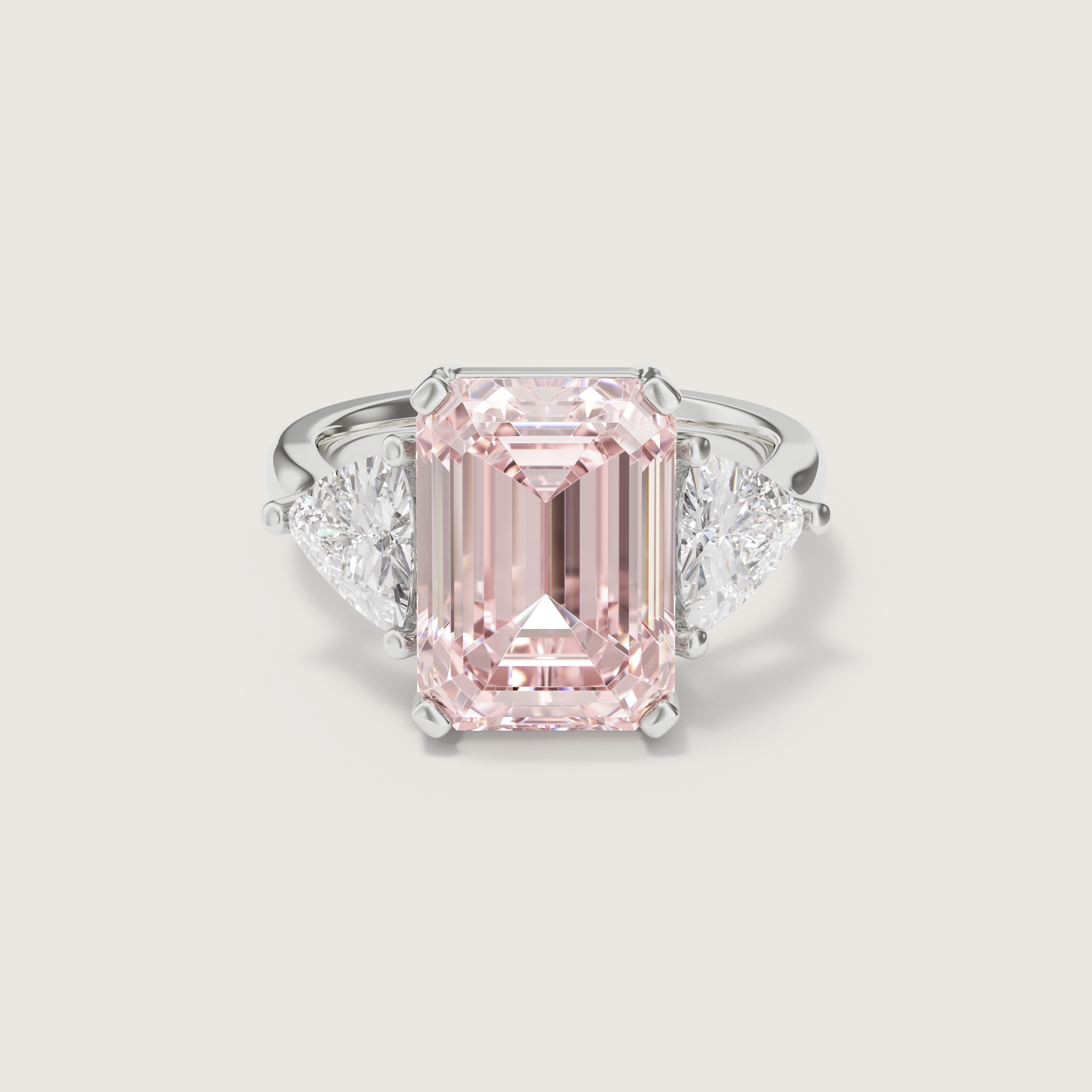
Cabana trilogy ring with pink emerald-cut center diamond.
Open one product page on Lindelli’s Shopify store, say, the Cleo Flat Band Solitaire, and the scale becomes concrete. A shape selector offers oval, pear, emerald, radiant, cushion, marquise, heart, and octagon. Each shape comes in multiple metals: 14K yellow gold, 18K yellow gold, 18K white gold, platinum. Each combination gets its own image set: a flat lay, a standing angle and, for many styles, a view on a hand. One ring style can carry upward of 80 images on a single product page.
To produce that set with photography, the brand would need to manufacture every combination first, then style and shoot each one. For a catalog with hundreds of styles and new collections landing regularly, the cost and lead time would be absurd. Multiply one ring by every available stone shape and metal, then multiply that by every style in the catalog. Jewelry 3D rendering is the only viable option. The marquise in yellow gold was never cast. It was rendered from the same scene file as the oval in white gold, because neither exists yet.
Scope of work
Each assignment follows the same pattern. The studio receives a Rhino file from the brand’s CAD designer and a short spec: which metals, which views, which stone shapes. The 3D product modeling and rendering deliverables break down as follows.
- CAD cleanup and finishing for render
- Silo renders in flat, standing and hand views
- Metal variants (yellow gold, white gold)
- Stone shape variants (up to 11 per style)
- Colored gemstone variants where specified
- Animation for select projects
- File names matched to Shopify variant structure
- Consistent studio lighting across the full catalog
A typical ring rendering package: two metals, three views per metal, several stone shapes — dozens of final images from a single scene.
What the client sends
The brief for a typical project is short. Here is what one actually looks like:
Render for diamond ring
Metals — yellow & white
Views — flat & standing
That is often the entire text. The Rhino file carries the geometry. The studio already knows the lighting, the angles and the naming convention from the previous 200 assignments — a Rhino jewelry rendering pipeline that runs the same way every time. When the design calls for a less common cut, such as old mine, European, trilliant or kite, the client attaches a facet reference so the studio can model the correct pattern. New colored gemstones (ruby, blue sapphire, aquamarine) come with a color swatch or photo reference.
Ready file names arrive with the brief. The rendered images slot directly into Shopify’s variant system. No one on Lindelli’s side renames or re-sorts anything.
Workflow
Every assignment moves through three stages: preparing the model for close-up rendering, producing the standard views, and generating variants across metals and stones. How a rendering project runs in general, in any category, is in our guide to 3D product rendering.
Model finishing
1 / 2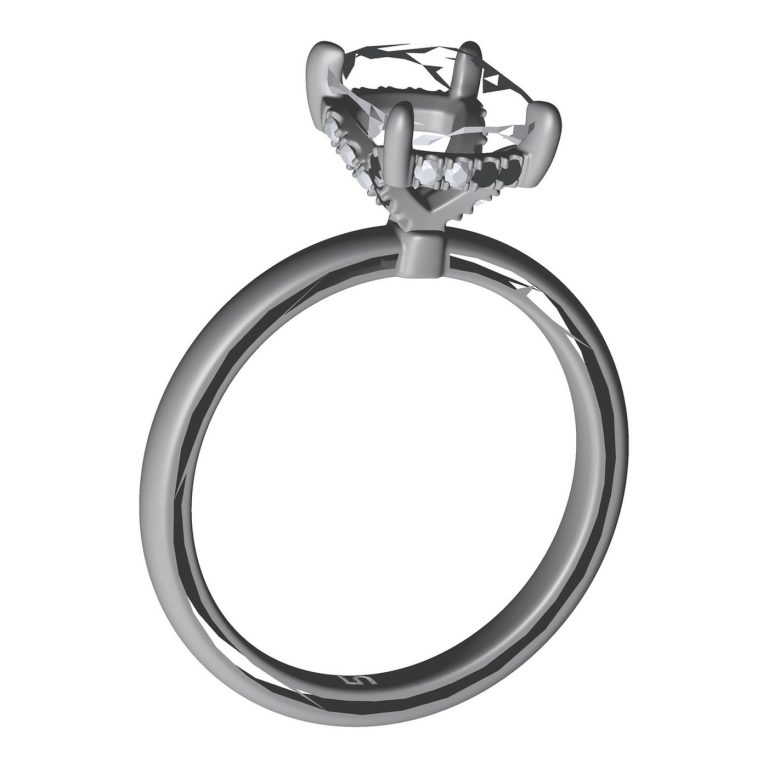
CAD model, full ring view.
2 / 2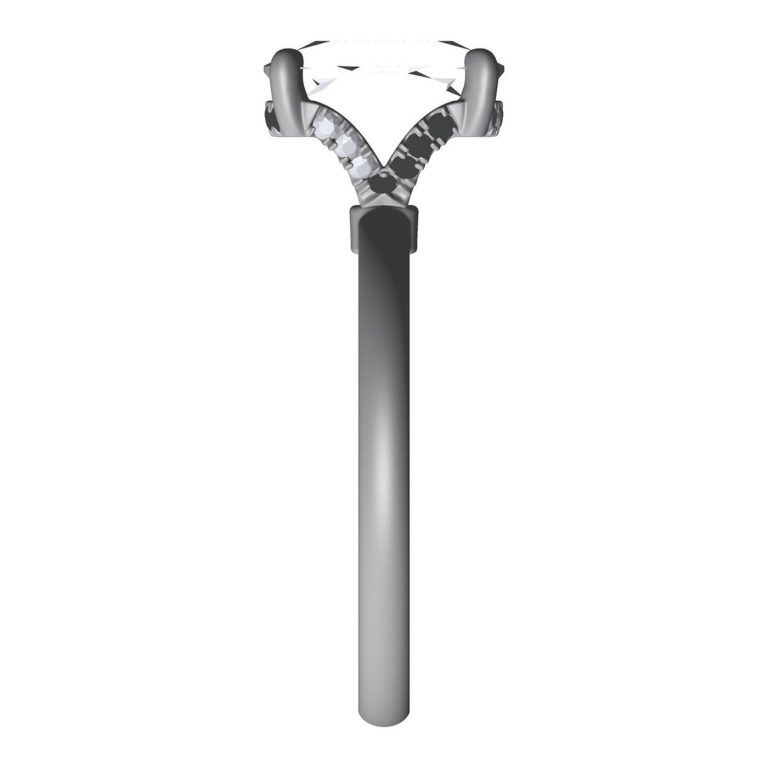
CAD model, side view showing prong and gallery detail.
A Rhino file from a jeweler’s workshop is built for manufacturing, not for rendering. It carries everything needed to produce the physical piece, but a photorealistic close-up has its own requirements: refined prong shapes, a fully detailed gallery under the center stone, precise stone seating with no visible gaps. The studio adds this rendering-specific detail before any material or light touches the scene.
Prongs get shaped to the client’s design language. The gallery is modeled to the proportions of the real setting. Pave stones are seated individually. This jewelry 3D modeling finishing pass takes the largest share of production time on any assignment. Once the model is clean, everything that follows is comparatively fast.
Flat, standing and hand views
1 / 3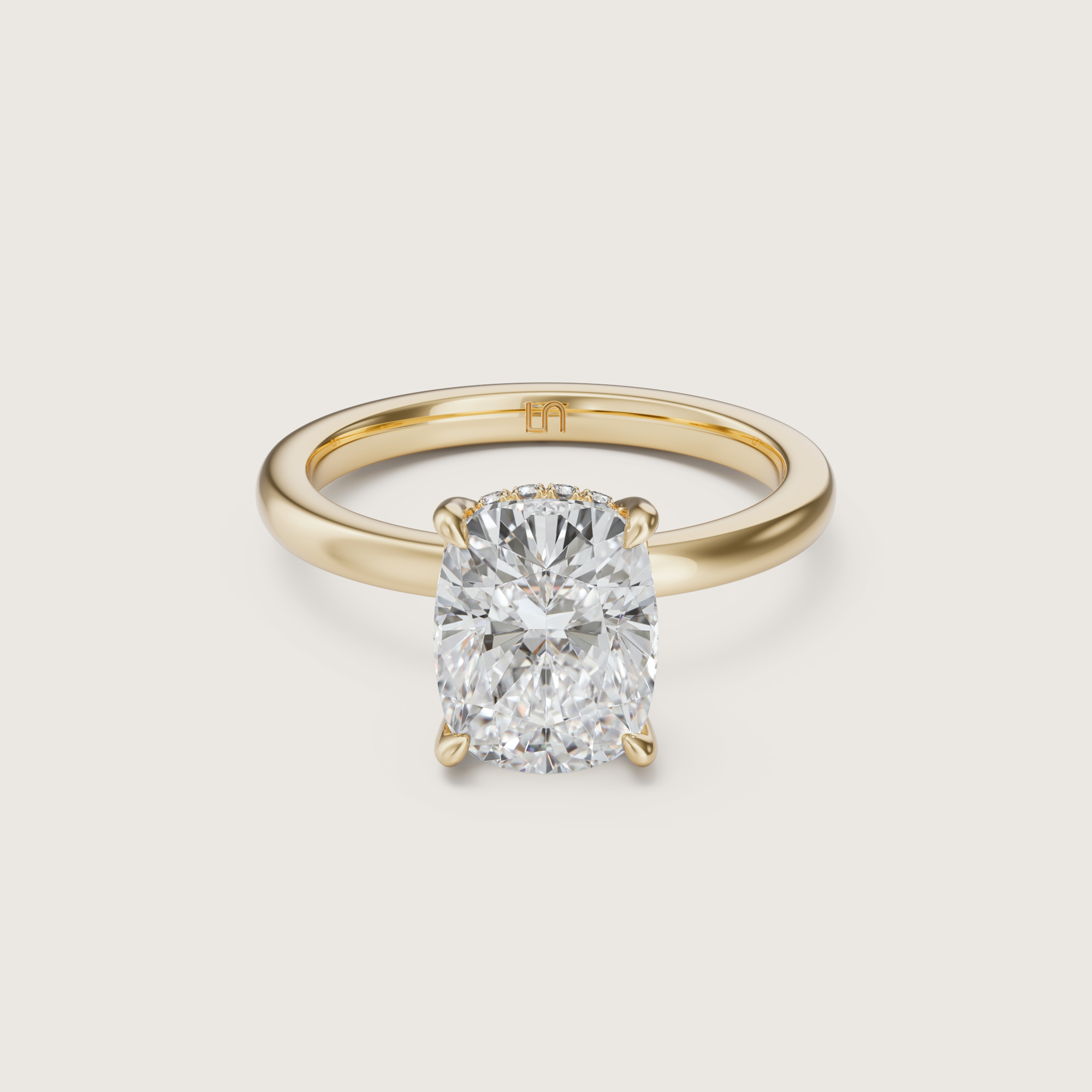
Flat view — cushion-cut hidden halo in yellow gold.
2 / 3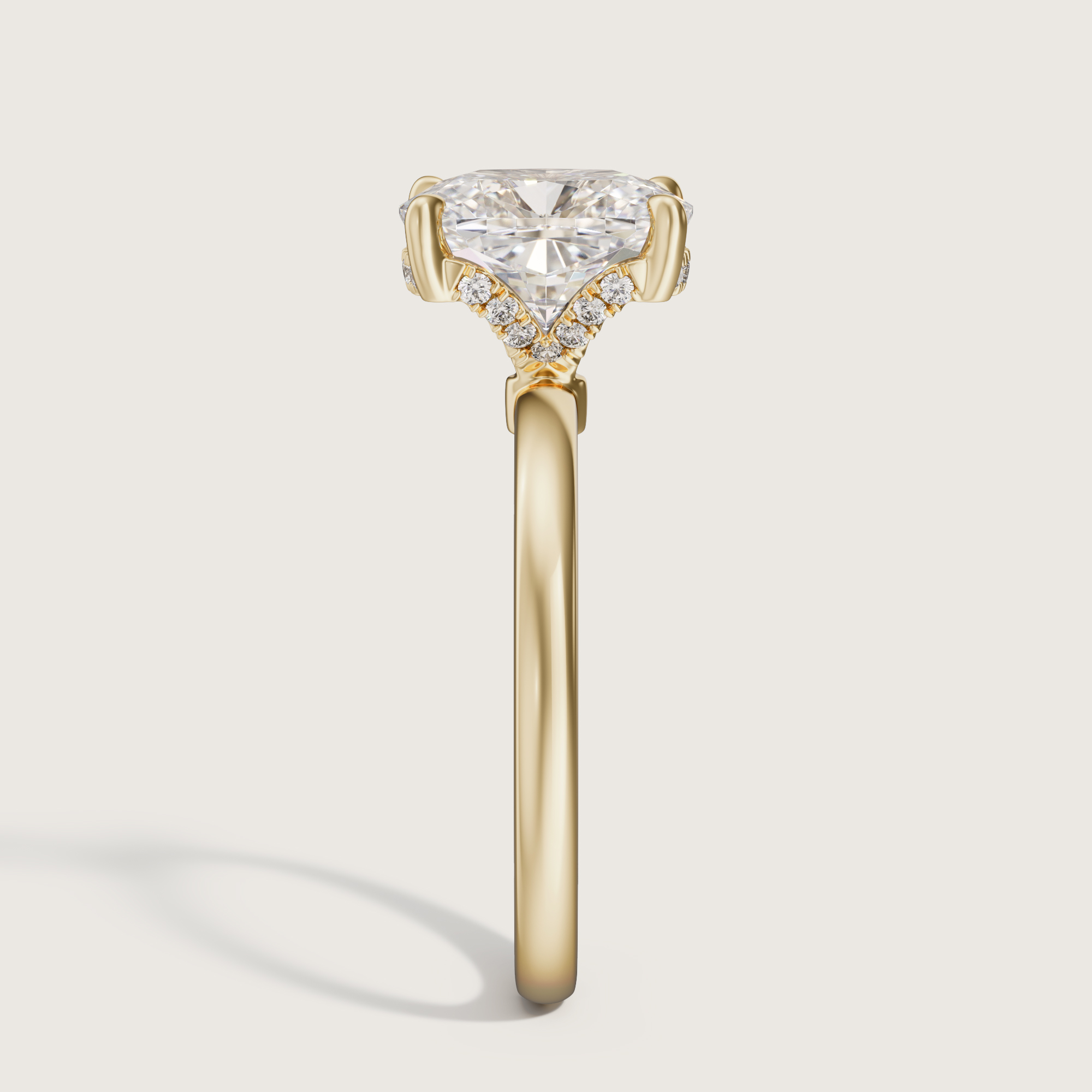
Standing view — hidden halo in yellow gold.
3 / 3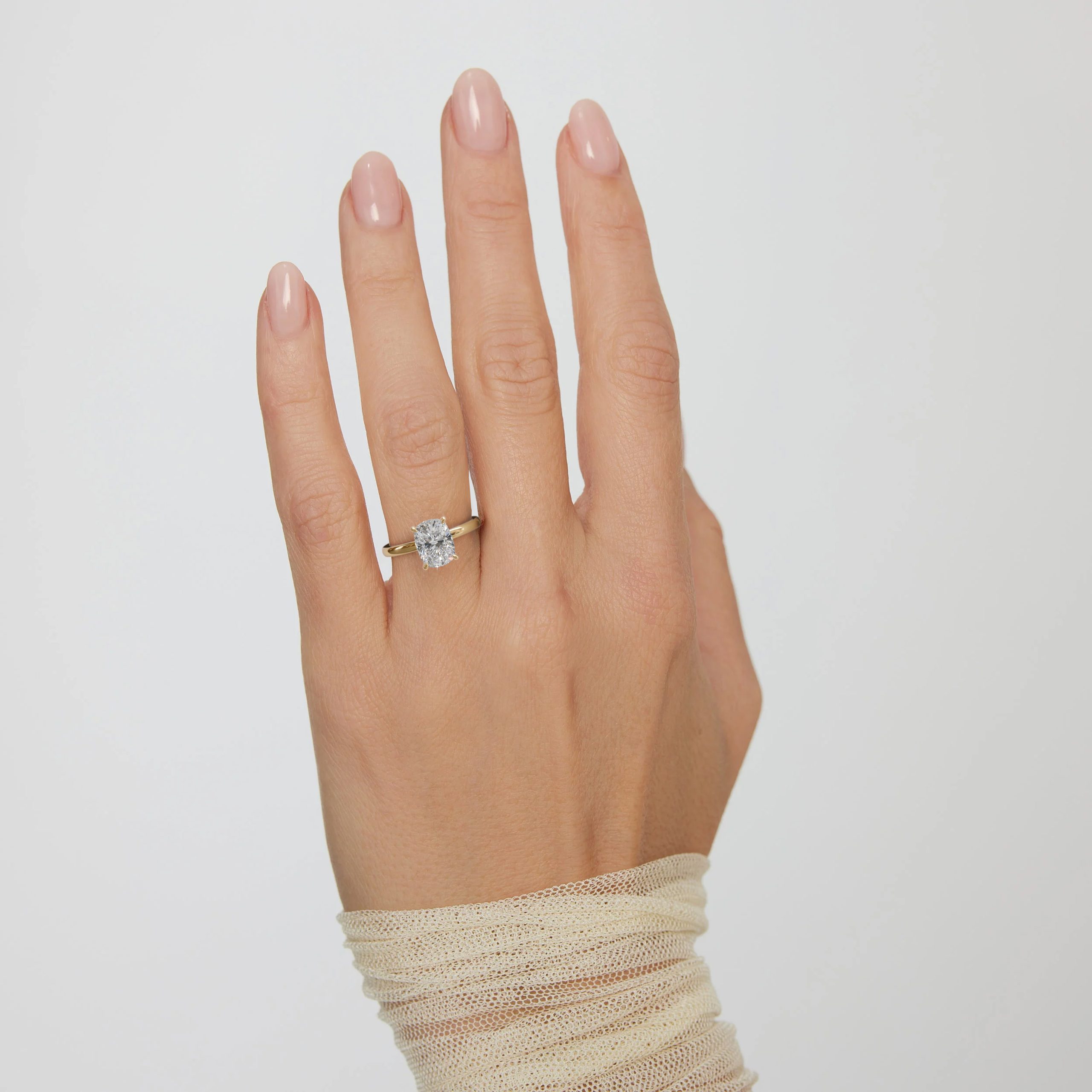
Hand view — hidden halo in yellow gold.
Lindelli uses three standard views across its catalog, and the studio adopted the client’s own terminology. Flat: a direct overhead shot of the ring on its back — stone face and band proportions at a glance, usually the primary product card image. Standing: the ring upright, slightly angled, showing the profile of the setting and the taper of the shank. It answers the question the flat view cannot: how thick is this ring, and how far does the stone sit up? Hand: the ring on a hand. A 2-carat oval on a white background could be any size. On a finger, it immediately communicates proportion. This is often the image that closes a sale.
Metal and stone variants
1 / 4
Cushion-cut, yellow gold.
2 / 4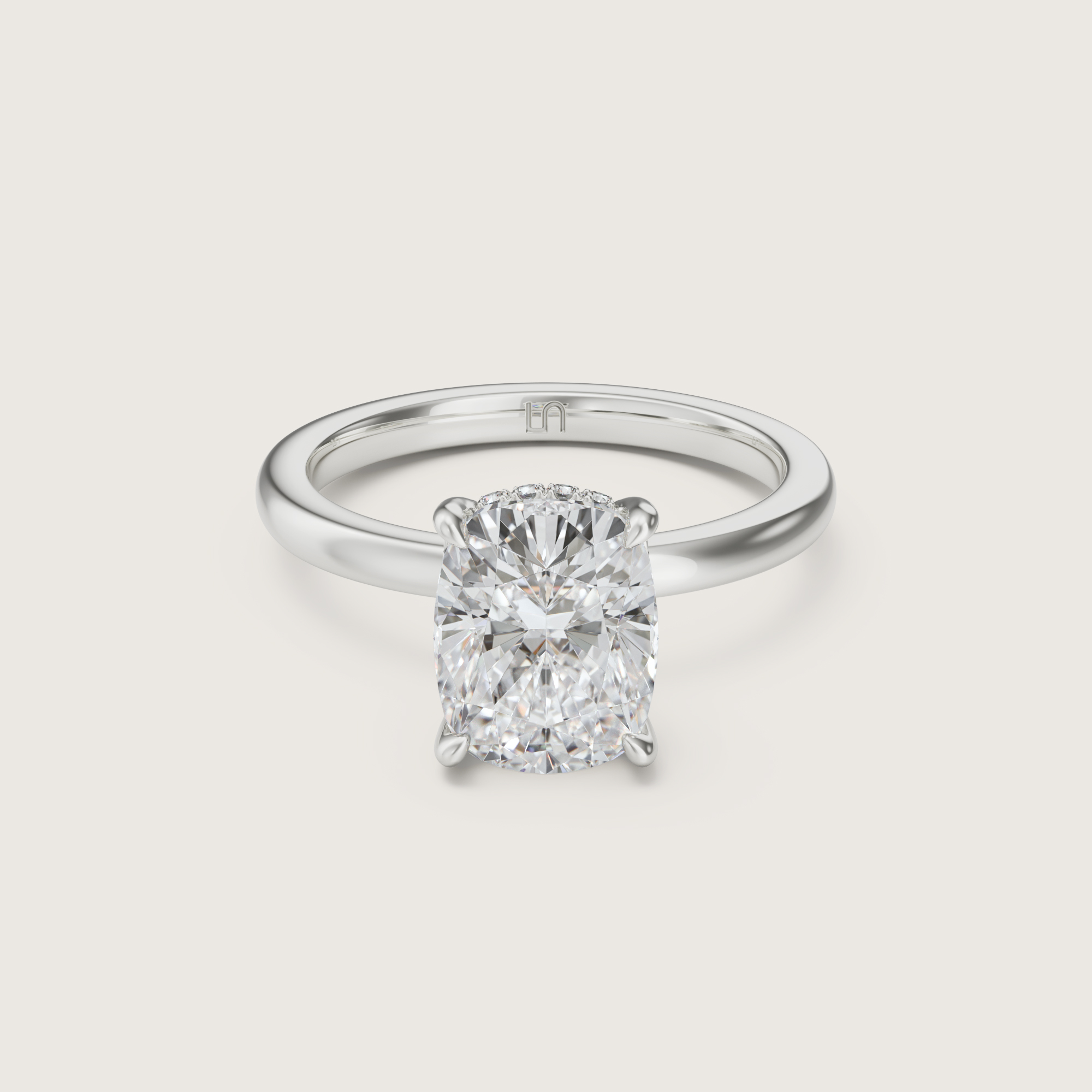
Cushion-cut, white gold.
3 / 4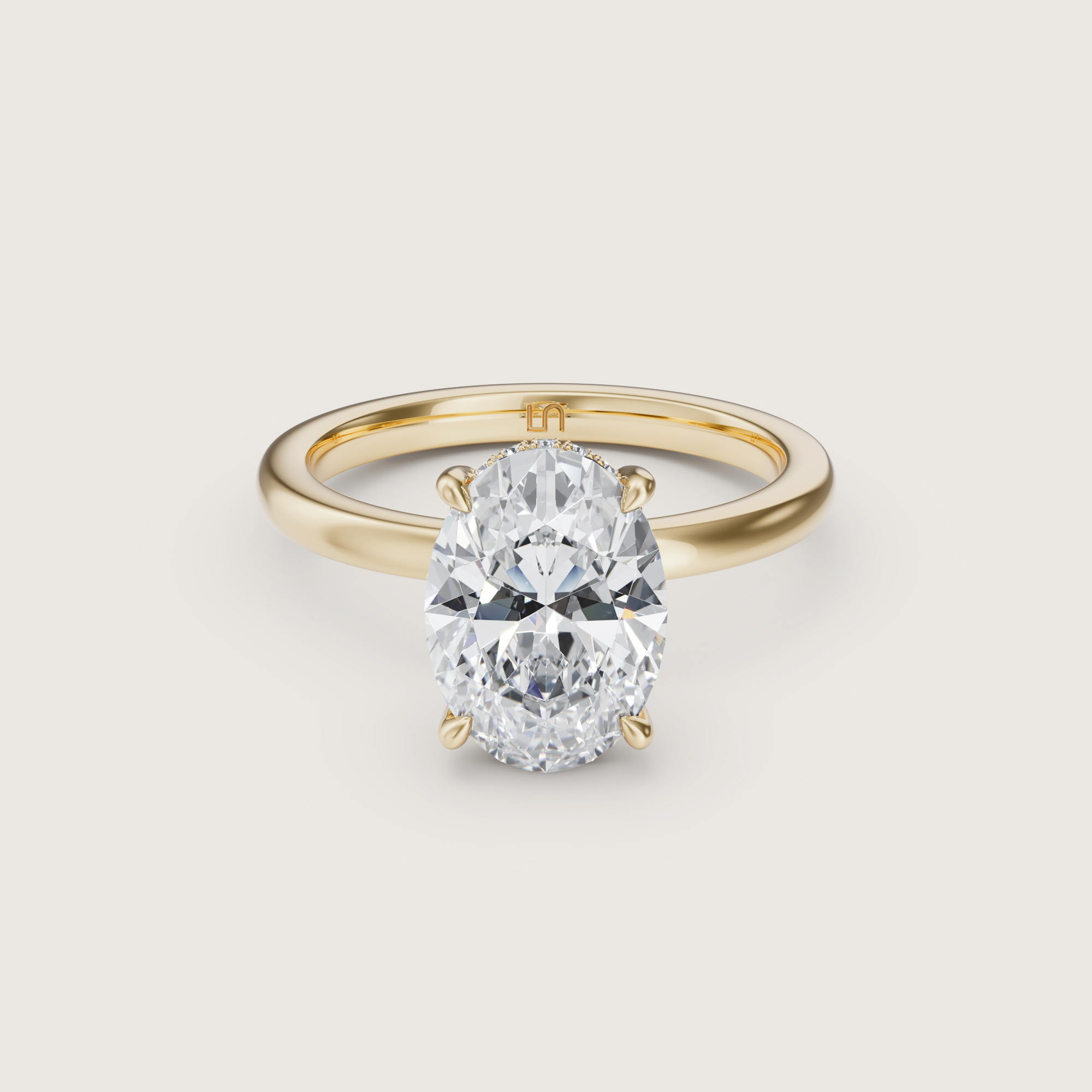
Oval, yellow gold.
4 / 4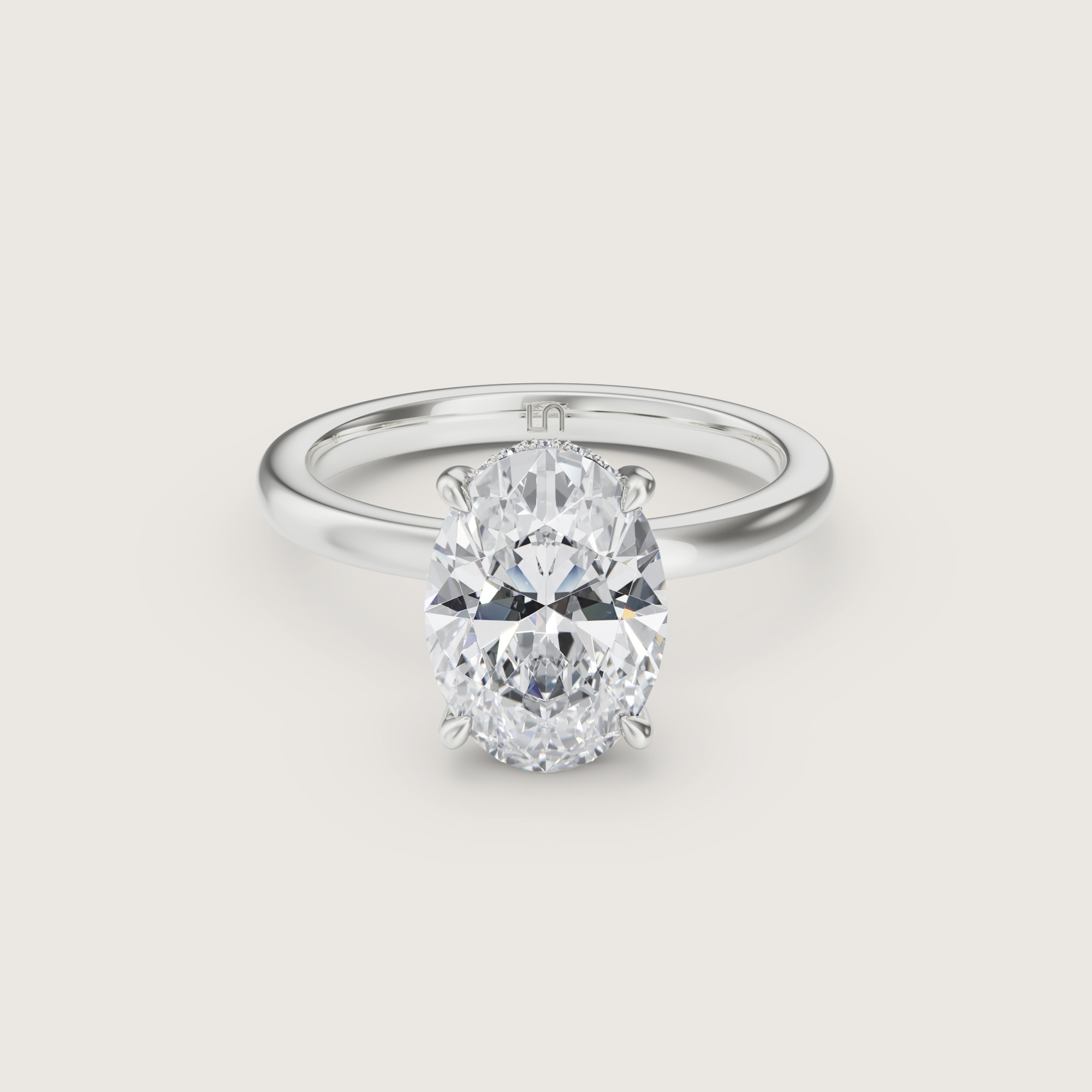
Oval, white gold.
This is where the economics live. The only expensive part of any rendering project is the first scene: the finished model, the lighting rig, the camera positions. Once that scene exists, producing a variant (swapping yellow gold for white gold, replacing an oval with a pear) reuses everything except the material definitions. The model stays. The lights stay. The cameras do not move.
Two outcomes matter to the client. First, cost per variant drops sharply after setup, which is what makes 80 images per product page viable. Second, every variant shares the same lighting and framing. The catalog looks like one catalog, not 200 separate photoshoots stitched together. Consistency at this scale comes from the production method itself.
Turnaround and volume
Standard turnaround: one week. That covers CAD cleanup, look development, the full set of variants and named files ready for upload. Volume runs to roughly five assignments per month, tracking the pace at which the brand develops new styles and expands existing lines.
At 200+ completed projects and counting, this is an ongoing production relationship shaped by the brand’s release calendar. Each new collection brings a batch of styles through the same pipeline. Five one-off projects taken apart the same way, from the client reference to the final render, are in product rendering examples. Consistency matters because volume is high: a customer browsing from a Cadre bezel ring to a Bloom solitaire should not be able to tell the images were produced months apart.
Where the images land
1 / 4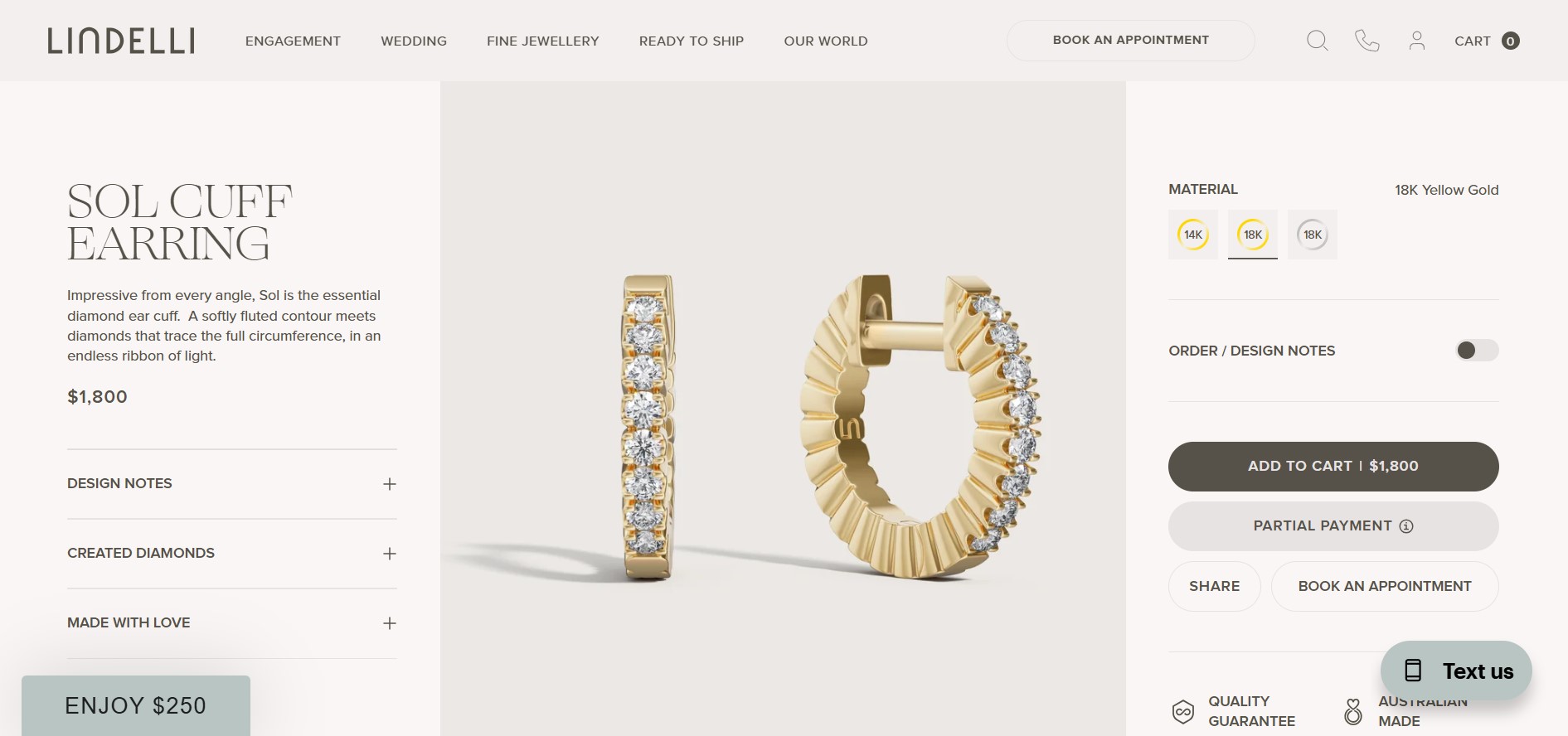
Earring product page on Shopify.
2 / 4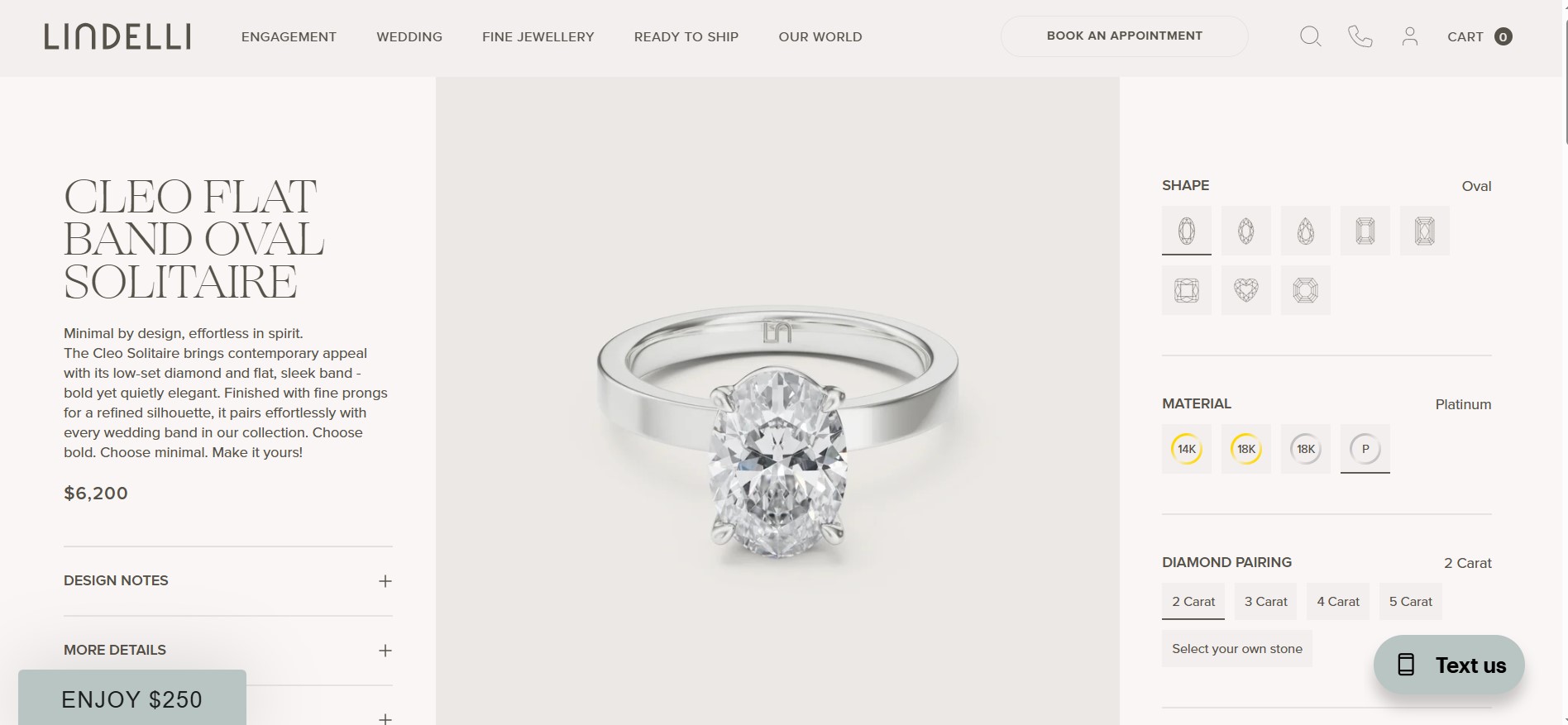
Solitaire product page with variant selectors.
3 / 4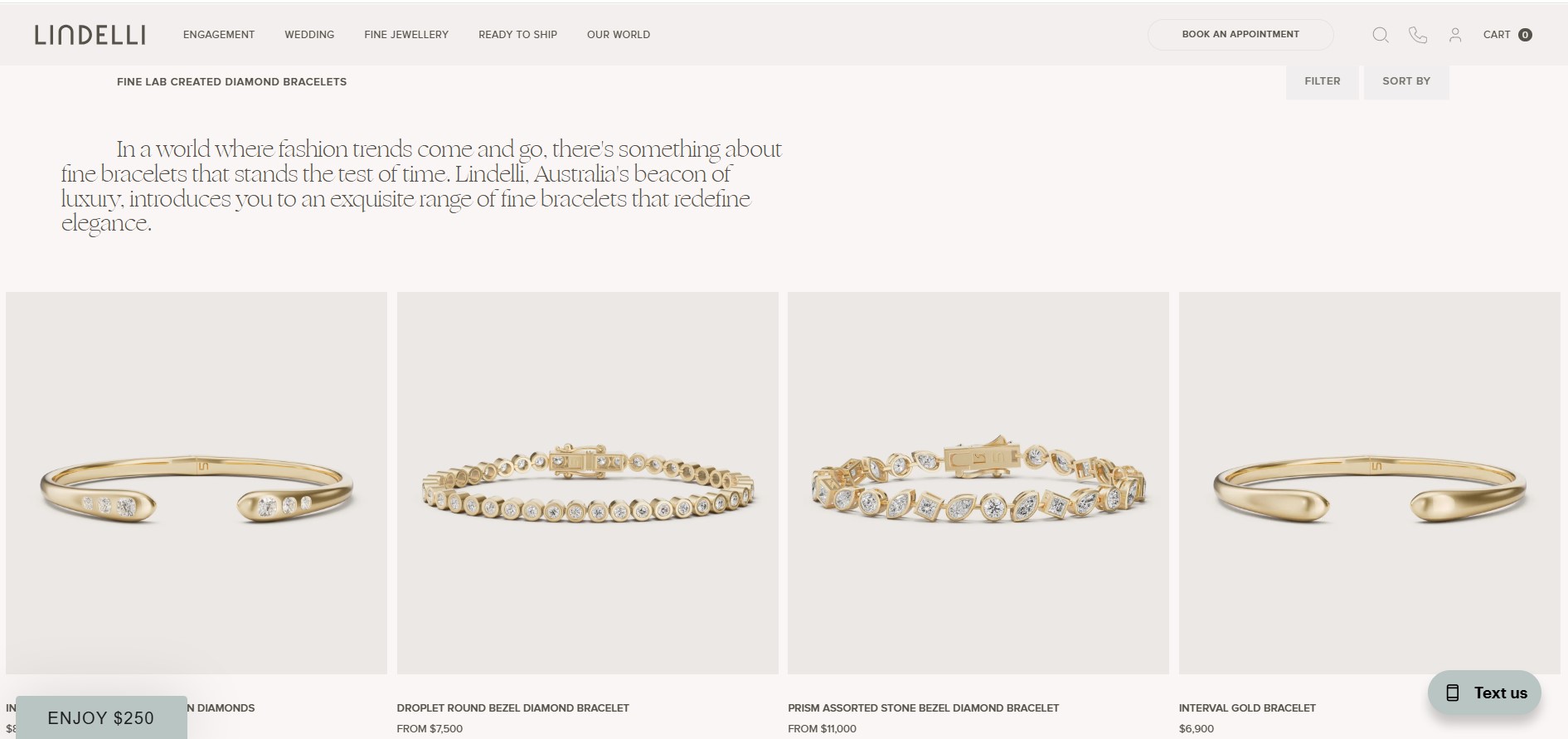
Bracelets collection page.
4 / 4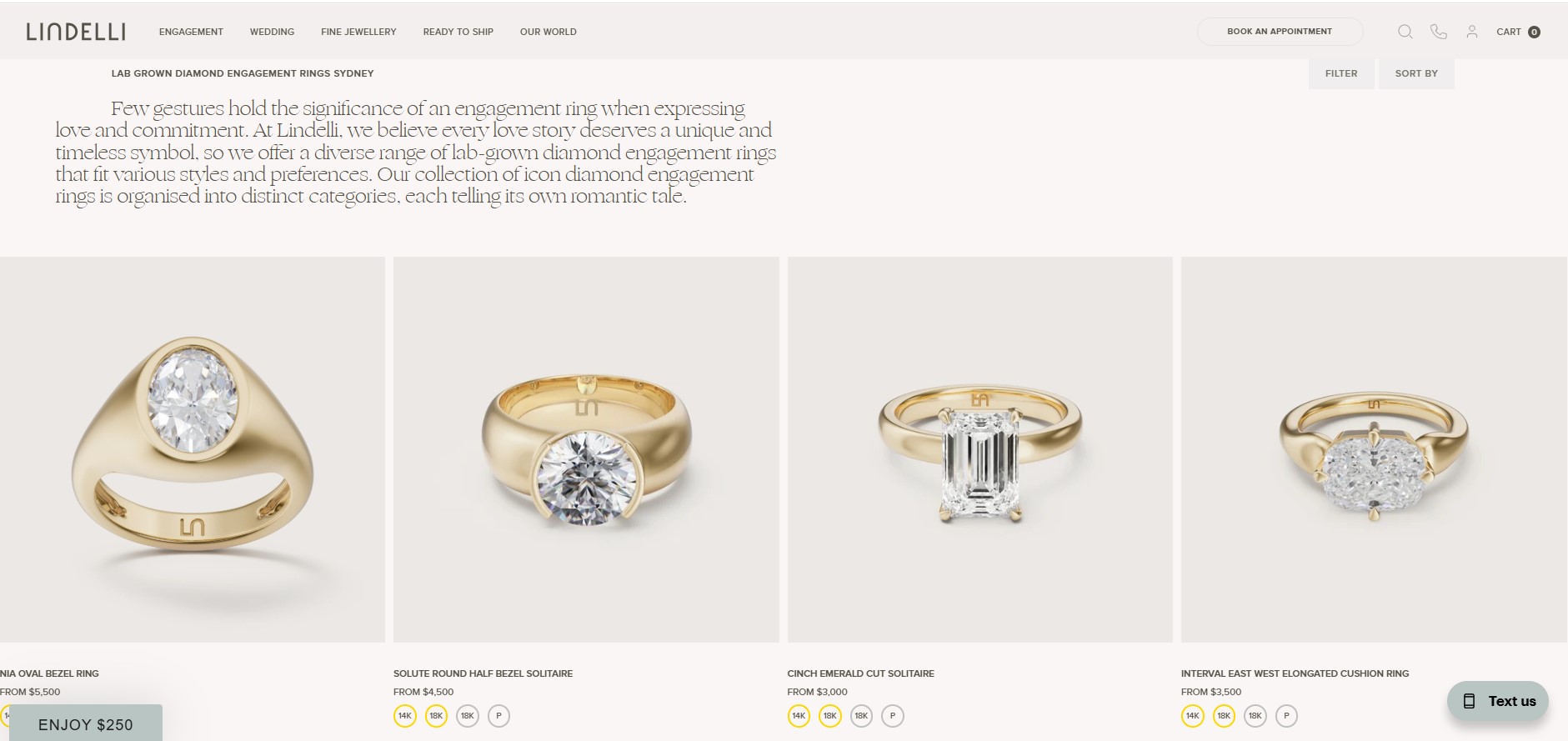
Engagement rings collection page.
The primary destination is the product page. File names follow Shopify’s variant structure, so when a customer selects “18K White Gold” and “Pear” on the page, the correct flat, standing and hand images load automatically. No manual assignment on the Lindelli side. The result is jewelry product images for Shopify that are built to be uploaded as is, and the naming convention handles the rest.
You can see and more of our 3D modeling and rendering work across other clients in the UFO3D portfolio.
If your catalog has more combinations than your studio can shoot, the starting point is simple: one piece and one CAD file. Our 3D rendering services team will return a test render within a week so you can judge the quality before committing to volume.