
How the car was built
Four stages, from the bare mesh to the finished frame. Each image below is the same car at a different point in the work.

Modeling
Body, wheels and trim as a bare mesh. You can see where the surfaces are split up, long before any paint goes on.

Texturing
Paint, chrome, glass and rubber go on. Each one catches the light the way it would on the real car.

Lighting
Lights placed around the car to trace its lines. This frame shows only the highlights, which is how the shape gets checked.

Rendering
The final image, with reflections, depth of field and shading worked out by the renderer.
Grey primer or finished paint
Drag the slider. On one side the car sits in grey primer with the door open, on the other it is finished in red, in the same scene and from the same camera.


Close-ups and silo shots
The same file gives detail shots, other paint colours and clean images on white for a catalogue.
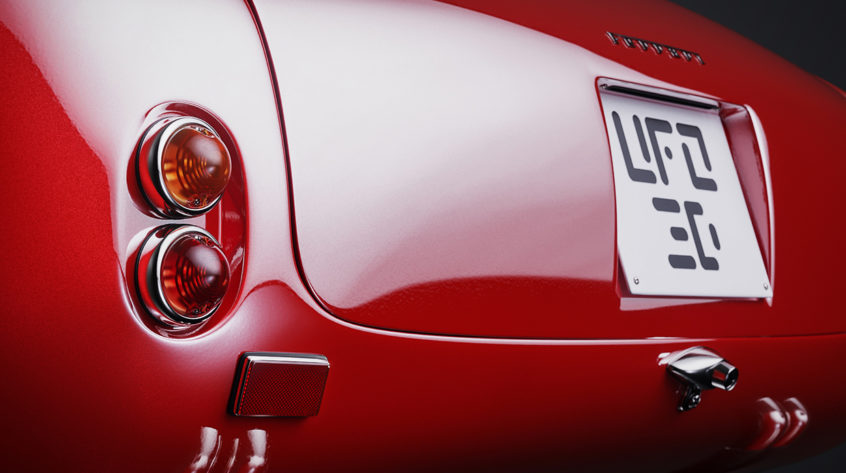
A second colour
The rear of the car in red, with the lights and the plate in close-up.
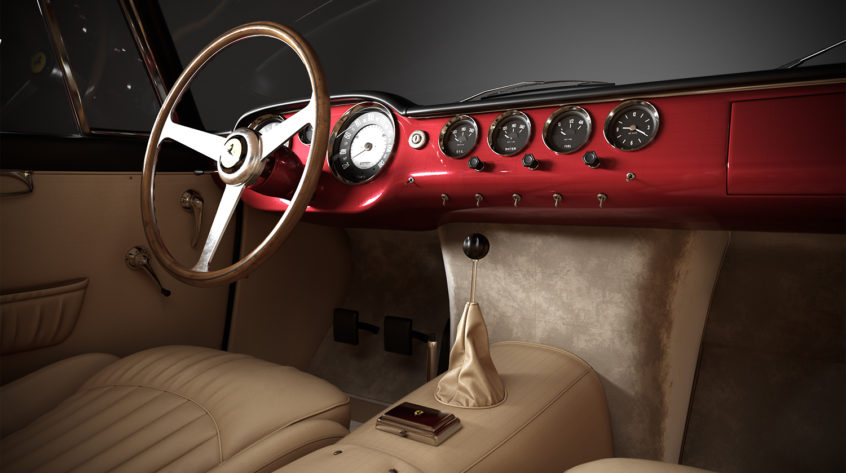
The dashboard
Wood rim, gauges and leather seats, lit like a studio interior shot.
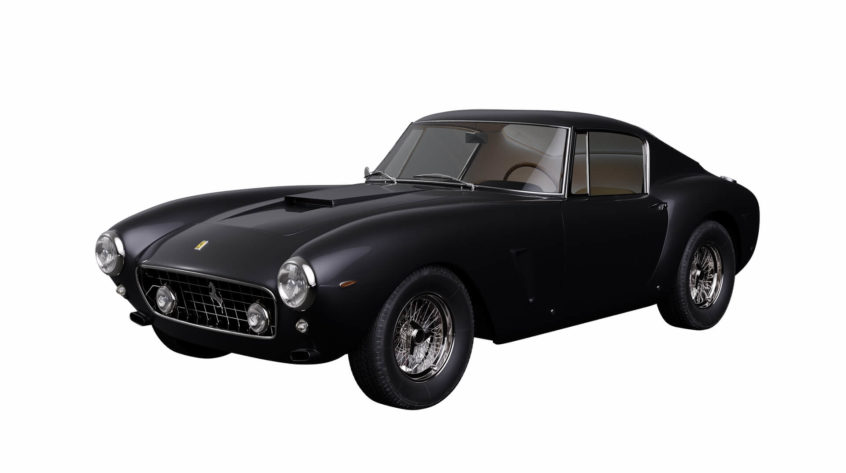
On white
Three-quarter view on plain white. Ready for a catalogue page.
The interior
First the mesh, then the finished cabin from the same spot. Below that, a 360° panorama you can turn and zoom.
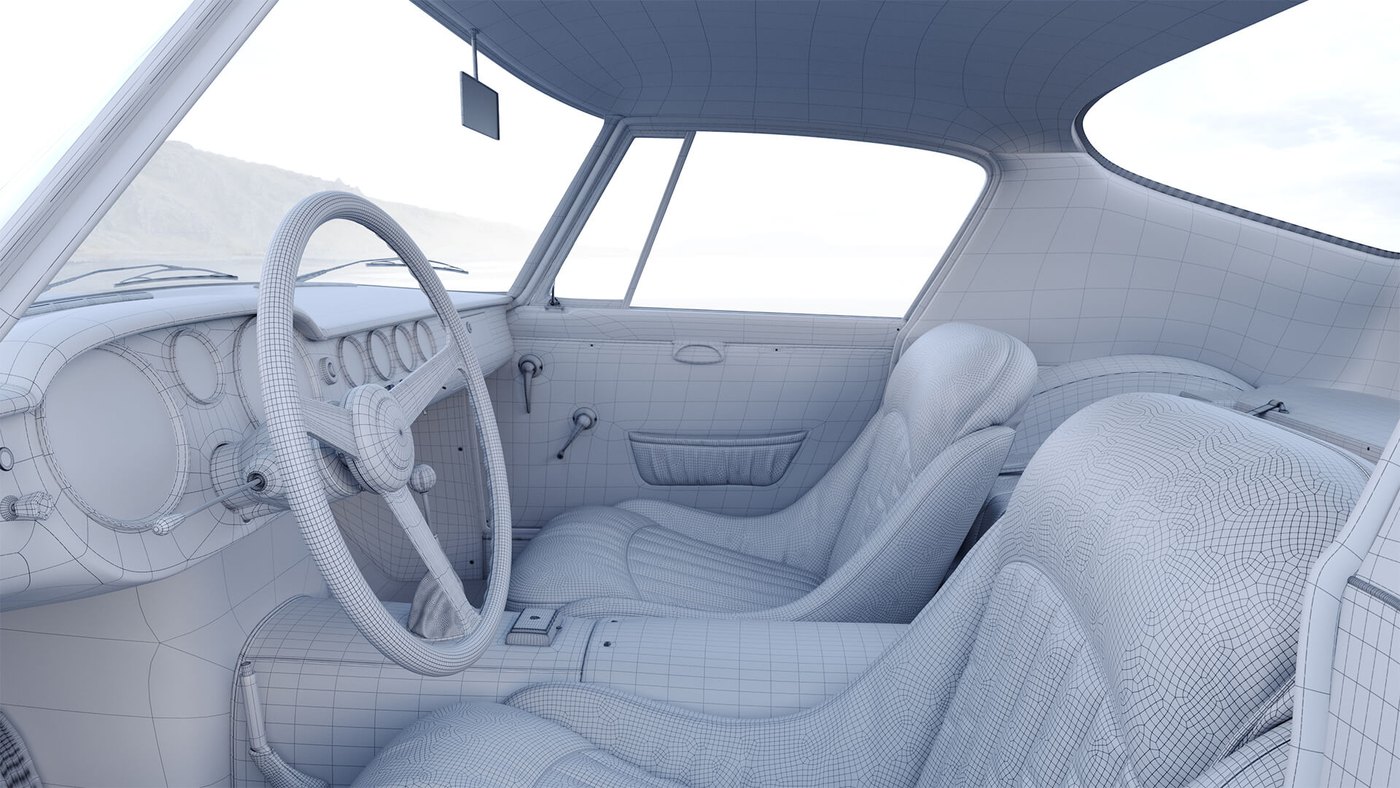
Wireframe
Seats, dashboard and door cards as a mesh before any materials.
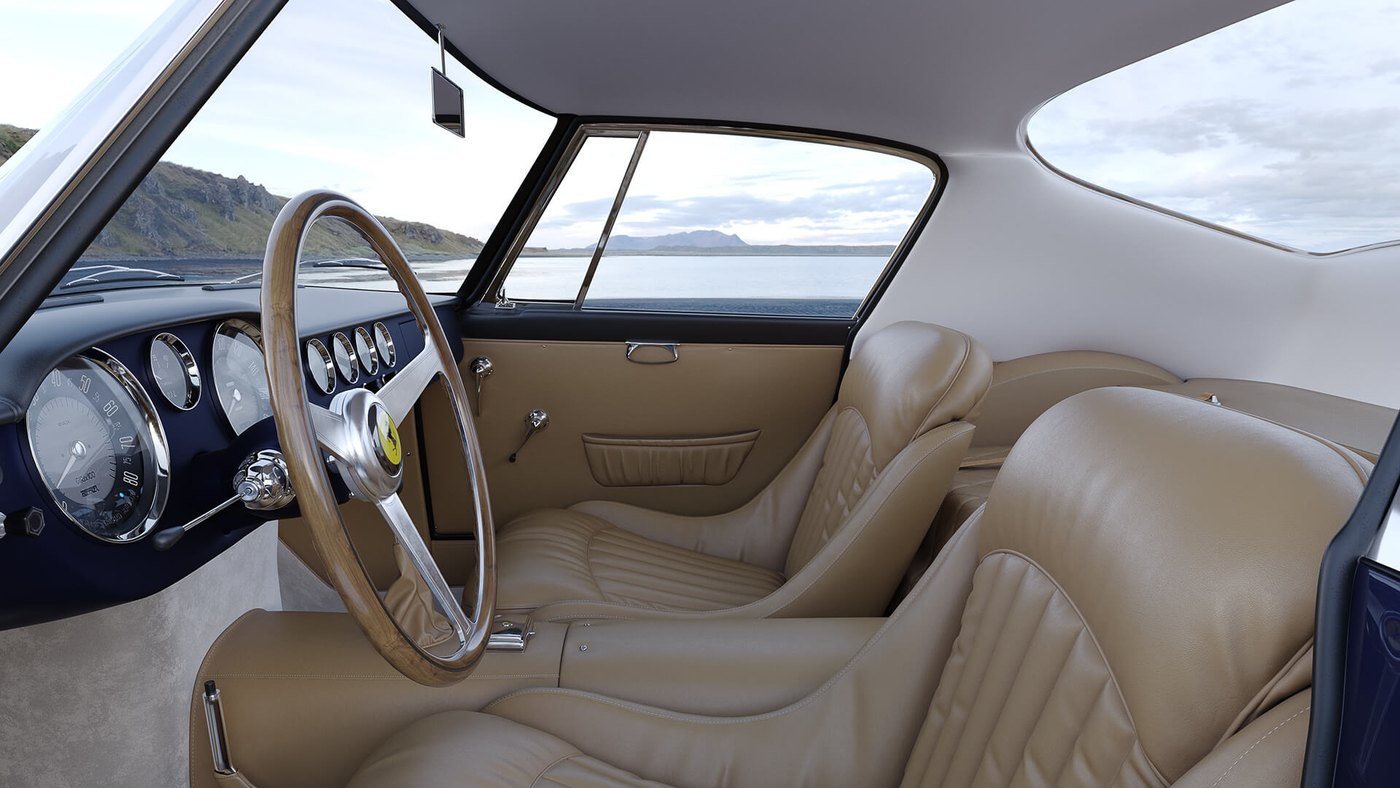
Final render
The same view with leather, chrome and glass applied and the light coming through the windows.
About This Project
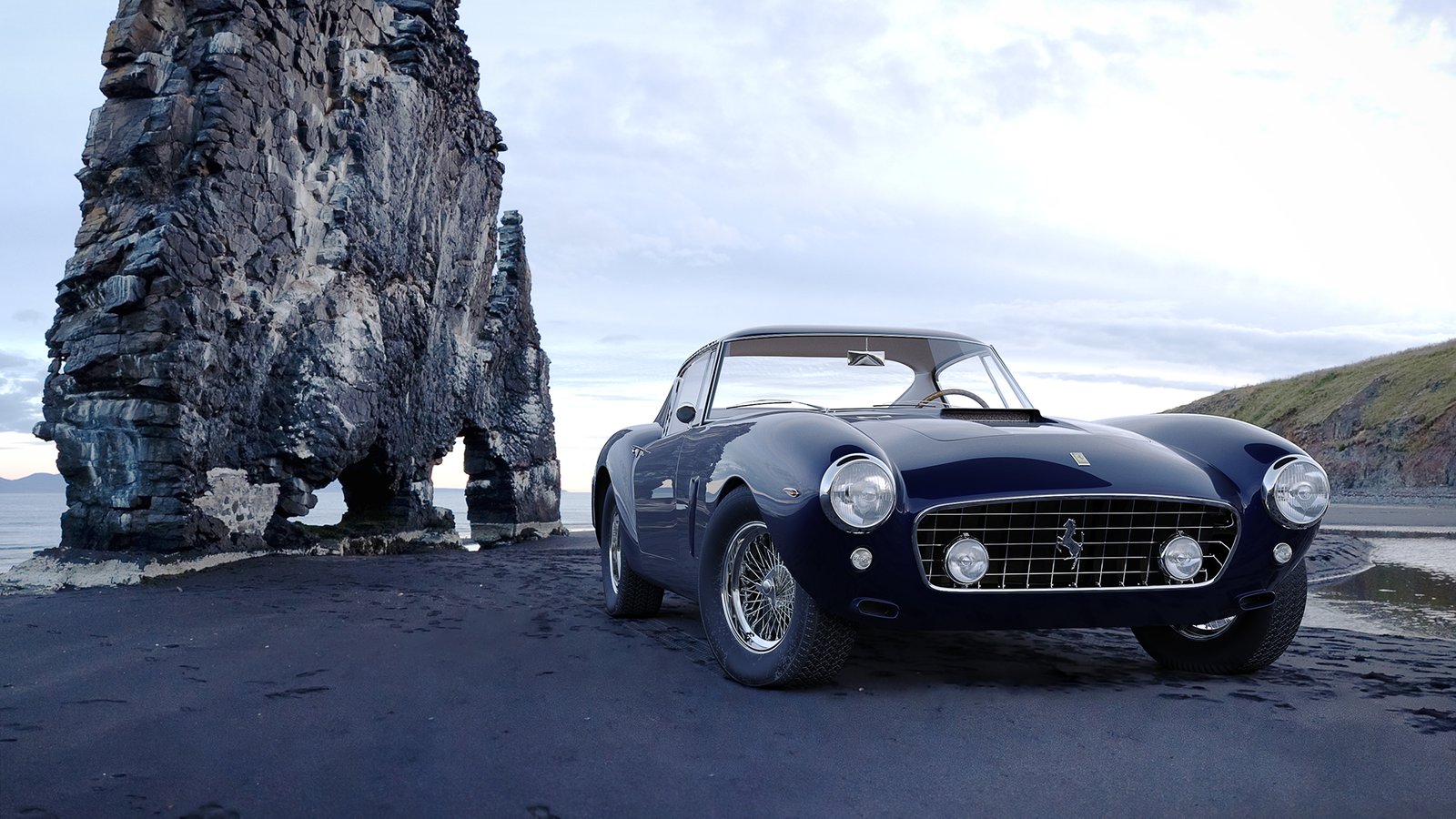
A classic sports coupe, modeled in 3D and rendered for marketing images: a hero shot on a black sand beach, studio shots of every stage of the work, close-ups, a version in a second paint colour, an image on white and a full interior with a 360° panorama. Everything on this page comes from one model of the car.
Why cars are a demanding job
Cars are about as hard as product work gets. The body is one long run of curved surfaces, and any wobble in the mesh shows up as a kink in the reflections. Car paint is a layered material, a colour coat with a clear coat on top, and it reflects everything around it. Then there is the chrome on the grille and bumpers, the glass, the wire wheels with dozens of spokes, the rubber of the tyres. On top of that comes a full interior: seats, door cards, gauges, a steering wheel. A model like this is priced by the hours it takes, at 20 USD an hour, and a car with a full interior sits at the complex end of our price table.
What the stages show
The four stage images above are worth reading in order. The wireframe shows how the body was divided into surfaces, which decides whether the reflections will flow cleanly later. The texturing shot adds paint, chrome and glass. The lighting shot keeps only the highlights, which is the quickest way to check that the light traces the lines of the body the way a photographer would want. The last image is the finished render. Clients can see and approve the shape at the first stage, before any materials go on.
Locations and paint without a shoot
Want to photograph a classic car? First you find one. Then insurance, a truck to the location, and a lot of waiting for decent light. In 3D we just put it on a beach for one image and in a dark studio for the next. The slider shows the same car on the same road twice: once in grey primer with the door open, once finished in red. The red close-up below works the same way. Same car, new paint. That’s a material change on the model, nobody had to find a second car. The image on white is the shot a catalogue or a marketplace listing needs, and it comes from the same file.
The interior
The cabin was built as carefully as the body, because buyers look inside. We took the wireframe and the final render from one camera position, so it’s easy to flick between the mesh and the finished leather, wood and chrome. The panorama lets you turn around inside the cabin and zoom in. Files like that run on a website, and they run in a VR headset too.
What else a model like this can do
Once a car exists in 3D, the same file can produce animations with the camera moving around the body, configurators where a buyer picks the colour and the wheels, AR files and as many new scenes as a campaign needs. Our 3D product rendering services page has the prices for stills and scenes, and what makes a render read as a photograph is explained in our article on photorealistic rendering.
Let us know if you’ve got an interesting project and want to work together!