
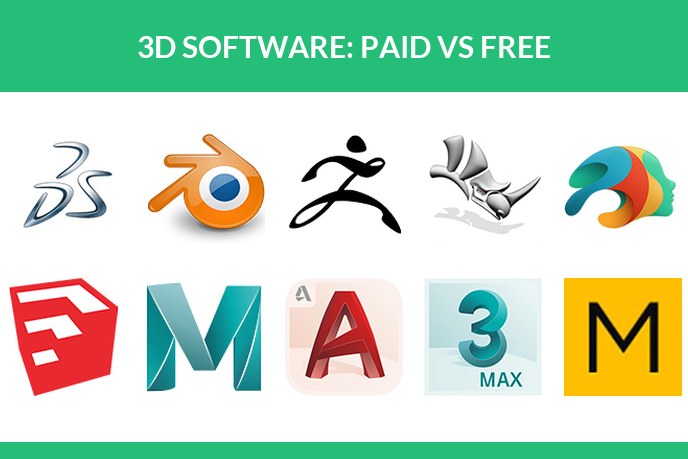
There is no best 3D modeling program, only the right one for what you are modelling. A jewellery designer, a furniture manufacturer and a character artist need three different tools, and the free option beats the expensive one in more cases than software vendors would like to admit.
The short version. For hard surface product work: 3ds Max, Rhino or SolidWorks. For organic shapes and detail: ZBrush. For everything at once on no budget: Blender, which is free and now genuinely professional. For quick shapes with no learning curve: Tinkercad or SketchUp Free in the browser. Below, the paid ones first, then the free ones, with what each is actually good at.
Contents
How to choose, in seven questions
| Question | What it decides |
|---|---|
| What are you making? | Products and mechanical parts point to CAD. Characters and organics point to sculpting. Interiors point to polygon modelling. |
| CAD or polygon modelling? | CAD is dimension driven and editable by parameters. Polygon modelling is faster for anything that does not need engineering accuracy. The two approaches are compared properly in polygon versus spline modeling. |
| What happens to the model afterwards? | Rendering, 3D printing, AR, manufacturing and games all want different geometry. Decide the output before the tool. |
| Which operating system? | Most run on Windows and macOS, but 3ds Max is Windows only, and that single fact decides it for a lot of people. |
| How much time do you have to learn? | Tinkercad is an afternoon. Blender is a few months. ZBrush and Maya are a career. |
| Do you need it to talk to other software? | Check the import and export list before you buy: STEP and IGES for engineering, FBX and OBJ for exchange, glTF and USDZ for the web and AR. |
| What is the budget, per year? | Subscriptions look small monthly and add up fast. A free tool plus a paid renderer is often the cheaper honest answer. |
The best paid 3D modeling software
Prices below are the vendor list rates at the time of writing. They change often and regional pricing varies, so treat them as a scale rather than a quote.
3ds Max
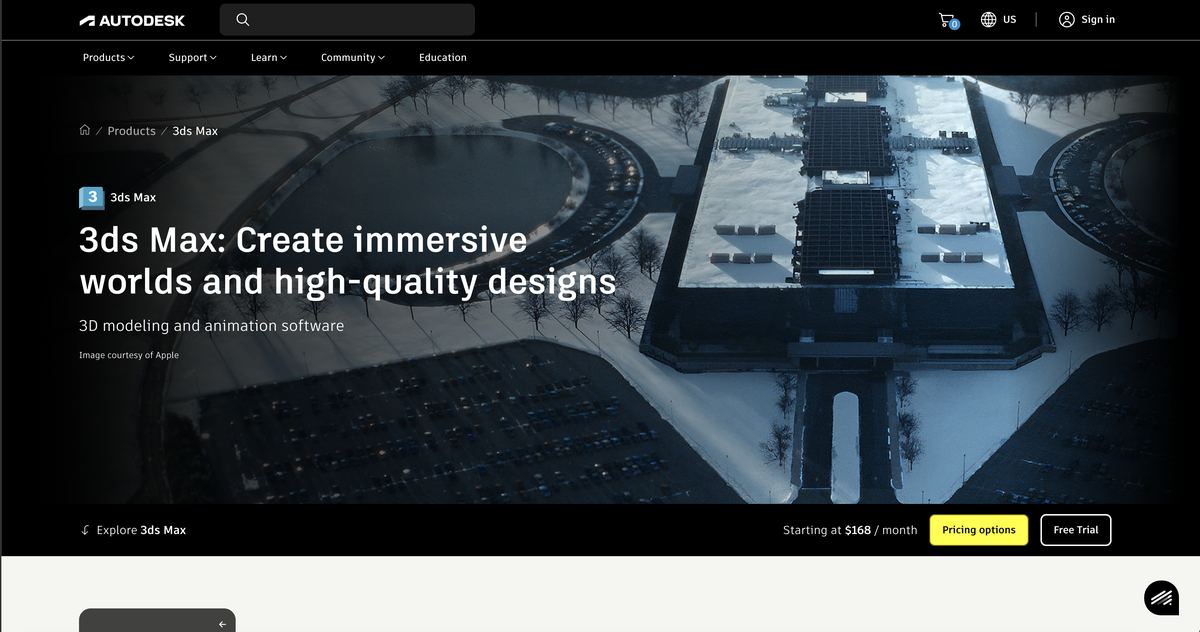
The workhorse of product and interior visualisation. Enormous library of plugins, the best relationship with V-Ray and Corona, and the modifier stack that most furniture and appliance modelling runs on.
Price. Windows only, around $168 a month or roughly $2,100 a year. Site: autodesk.com.
Verdict. Choose it if you render products or interiors for a living. Avoid it if you are on a Mac.
Maya
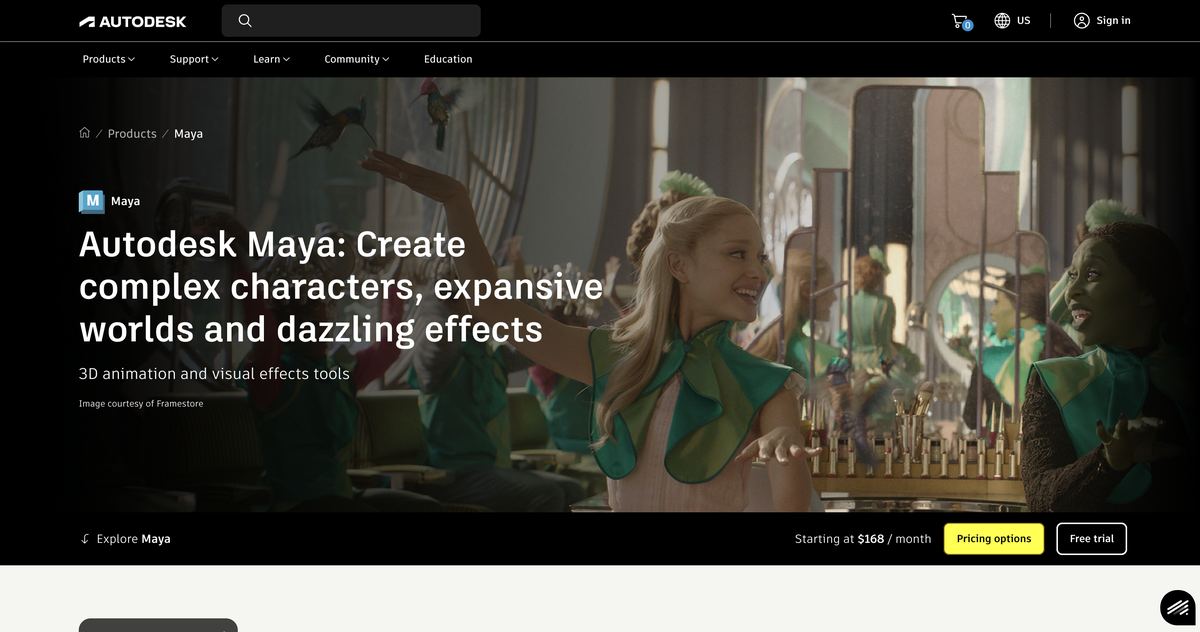
The animation and character standard, used across film and games. Better rigging and animation tools than 3ds Max, comparable modelling. When the job is a product film rather than a still, the choice between these packages works differently, and we compare them for that case in animation software for product video.
Price. Windows, macOS and Linux, around $168 a month. Site: autodesk.com.
Verdict. Choose it for characters, rigging and animation. For a static product shot it is more tool than you need.
ZBrush
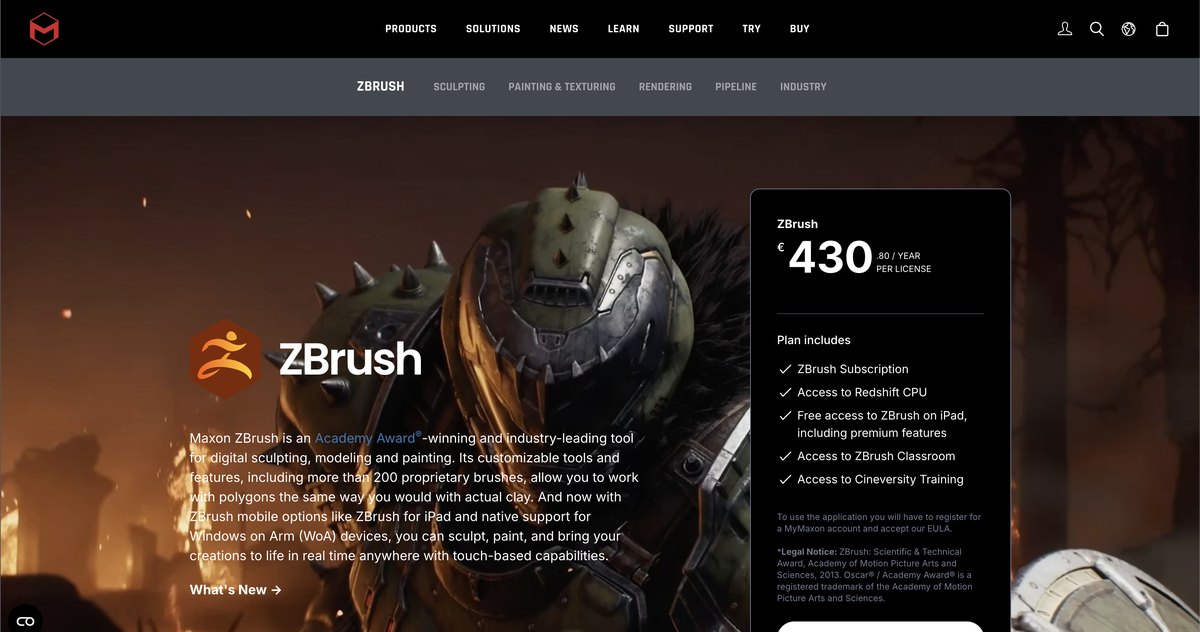
Digital sculpting. Millions of polygons, brushes that behave like clay, and detail no box modeller can match. Now part of the Maxon suite.
Price. Subscription or perpetual, roughly $40 a month. Maxon lists €430.80 a year per licence. Site: maxon.net.
Verdict. Choose it for organic shapes, ornament, jewellery detail and anything hand sculpted. It is not a CAD tool and does not pretend to be. Where sculpting sits against regular modeling is its own question, answered in modeling versus sculpting.
Cinema 4D
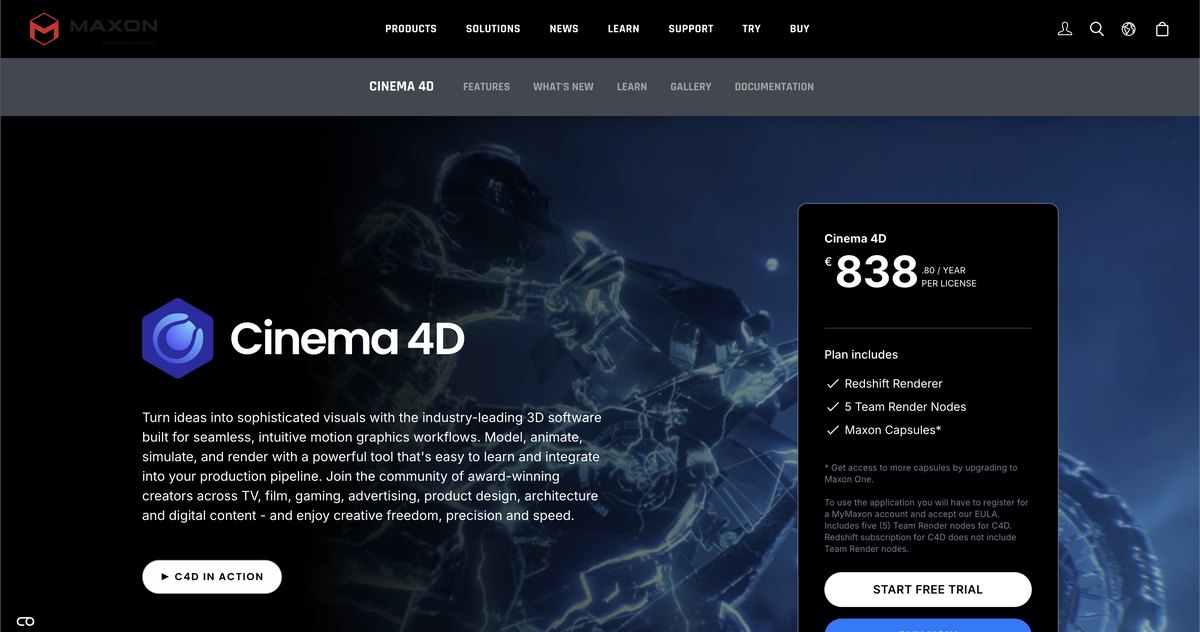
The friendliest of the professional packages and the motion graphics favourite. Clean interface, excellent MoGraph tools, very stable.
Price. Around $60 to $80 a month depending on the plan. Maxon lists €838.80 a year per licence. Site: maxon.net.
Verdict. Choose it for motion graphics and product animation, and if you want a professional tool without the 3ds Max learning cliff.
SolidWorks
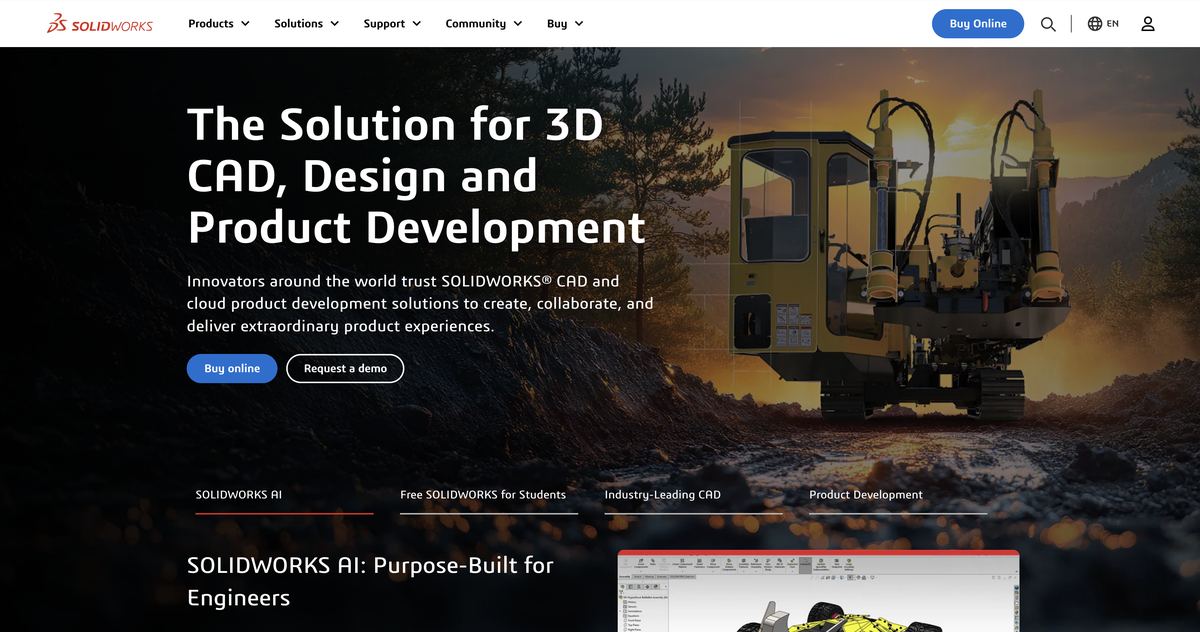
Parametric mechanical CAD. Everything is driven by dimensions and constraints, so changing one number updates the whole assembly. This is what your manufacturing partner is probably using.
Price. Perpetual licence in the thousands, plus annual maintenance, sold through resellers. Site: solidworks.com.
Verdict. Choose it if the model has to be manufactured. For visuals only it is expensive overkill.
Rhino
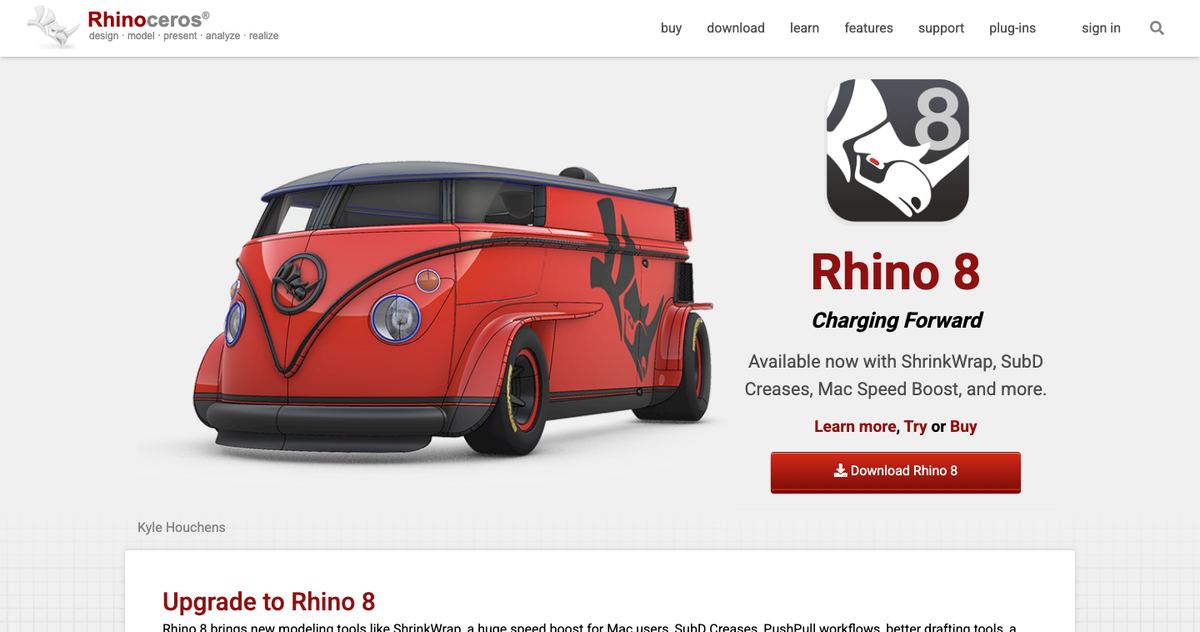
NURBS modelling with a gentle price and no subscription. Strong for industrial design, jewellery, furniture and anything curved that still needs accuracy. Grasshopper adds parametric design on top.
Price. Perpetual licence around $995, no subscription. Site: rhino3d.com.
Verdict. Choose it for industrial design and jewellery, or when you want engineering precision without the CAD price tag.
Marvelous Designer
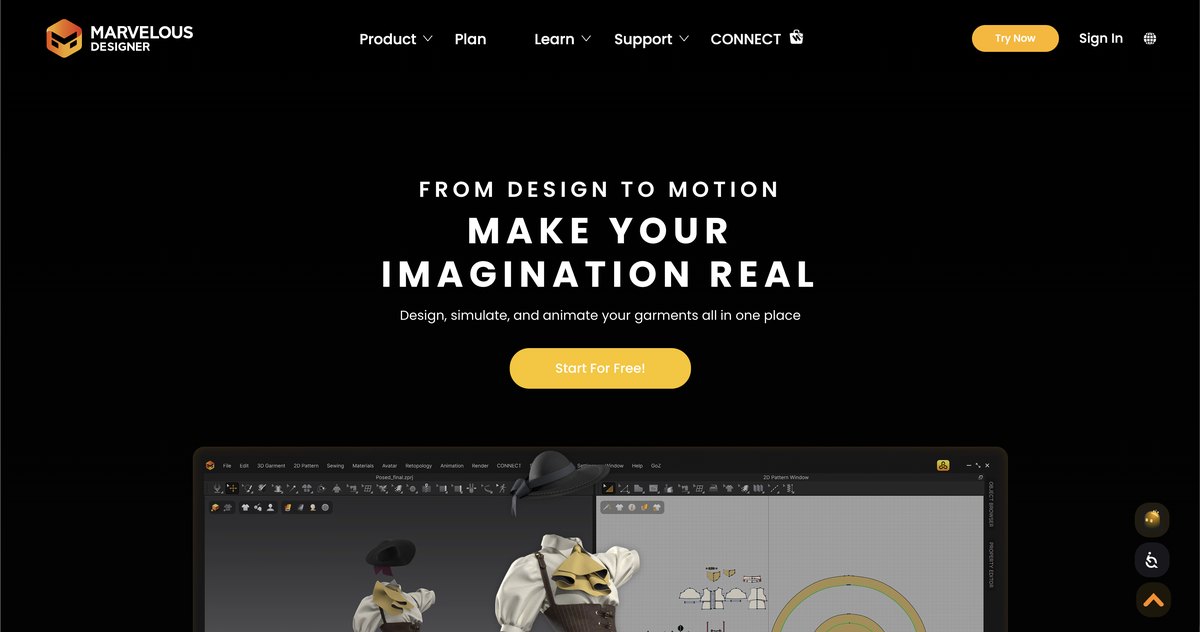
Cloth simulation done the way tailors think: draw the pattern, sew the seams, let physics drape it. Nothing else produces convincing fabric this quickly.
Price. Subscription, roughly $50 a month, cheaper annually. Site: marvelousdesigner.com.
Verdict. Choose it for upholstery, bedding, curtains and clothing. Outside soft goods it has no use.
AutoCAD
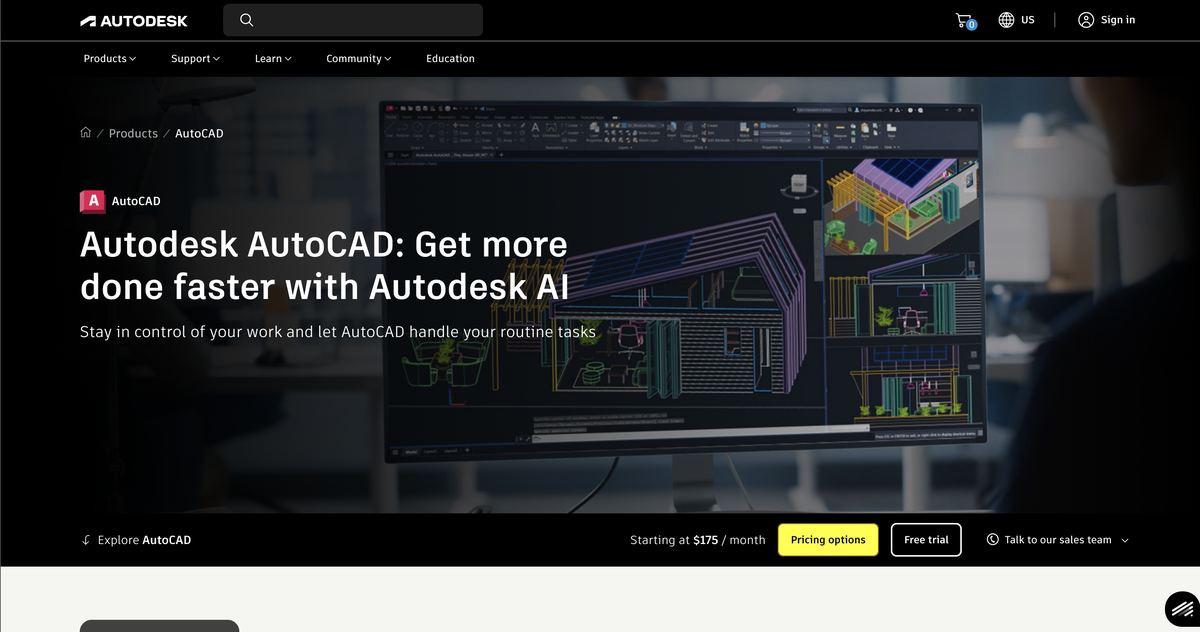
The drafting standard. Mostly 2D, with 3D capability that exists rather than excels. Its real value is that everyone in construction and manufacturing can open the file.
Price. Around $175 a month. Site: autodesk.com.
Verdict. Choose it for drawings and documentation. Do not choose it as your main 3D modeller. We compared it head to head with 3ds Max for product work in AutoCAD 3D versus 3ds Max.
Shapr3D
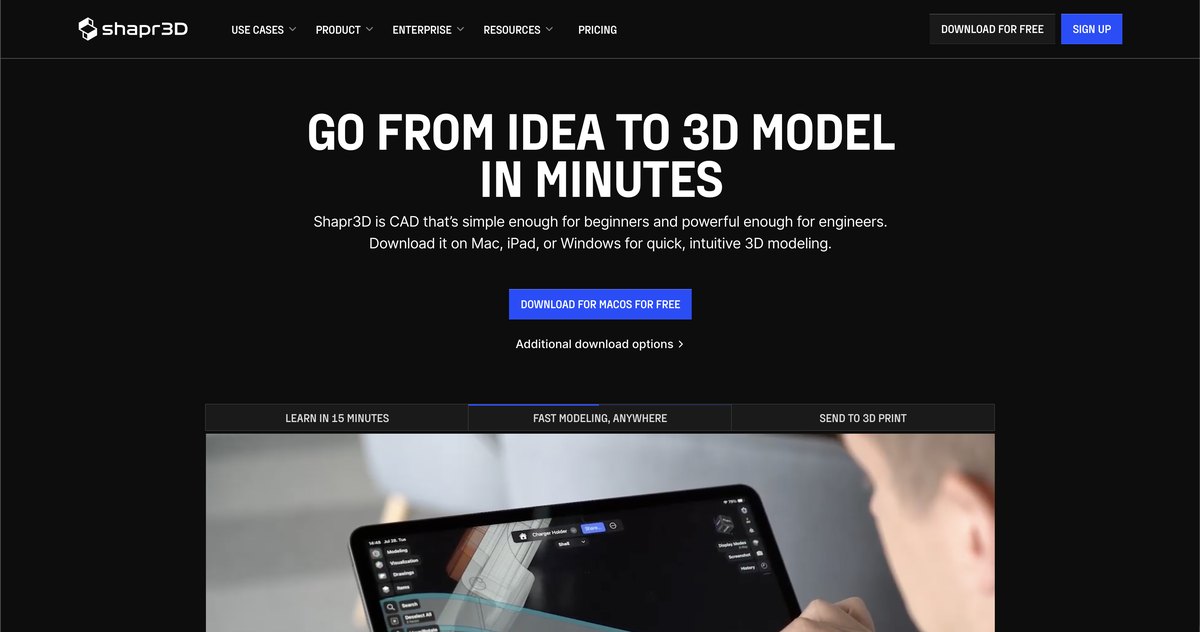
Direct modelling that runs the same on a desktop, an iPad and a Vision Pro, with a pencil instead of a mouse if you want one. It exports STEP, IGES and X_T, so what you draw goes to a manufacturer rather than only to a render. Ten years ago this category did not exist; today it is the first result Google shows for 3D modeling software.
Price. Pro around $299 a year. There is a free tier with project limits. Site: shapr3d.com.
Verdict. The fastest route from an idea to a manufacturable shape if you think in solids and dislike CAD interfaces.
Fusion 360, now called Autodesk Fusion
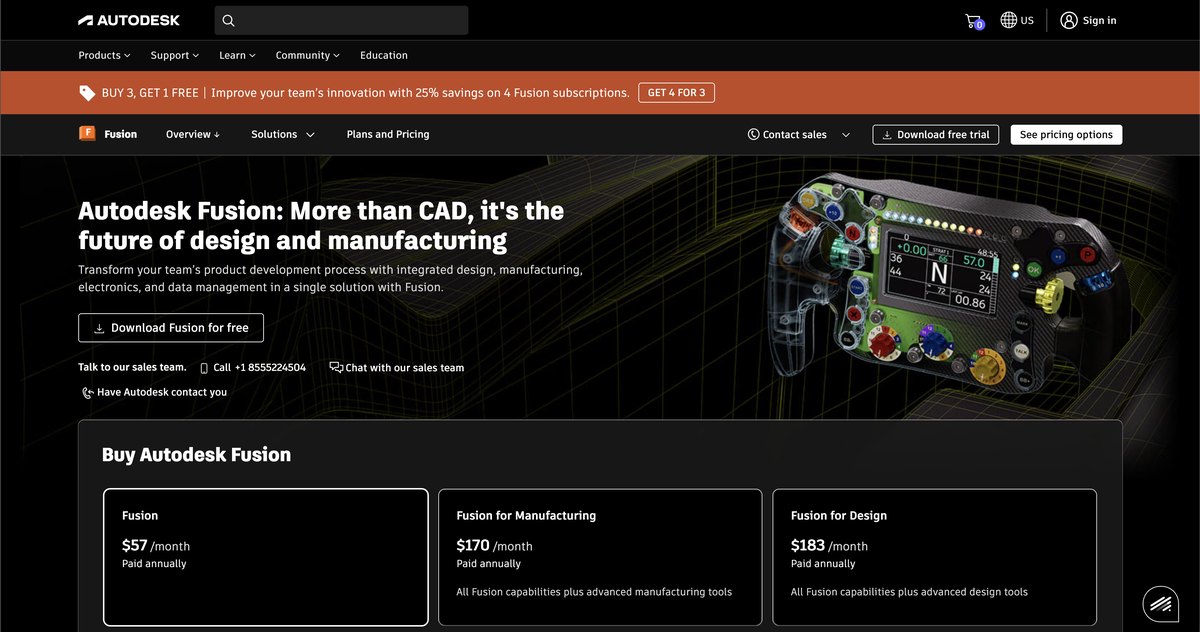
Autodesk’s cloud CAD with CAM and simulation attached, which is why small manufacturers and mechanical designers keep landing on it. Parametric history, assemblies, sheet metal, toolpaths for the machine that will cut the part. Autodesk dropped the 360 from the name, so you will see both versions written everywhere.
Price. Free for personal, non-commercial use. The commercial subscription starts at $57 a month paid annually, with dearer tiers for manufacturing and for design. Site: autodesk.com.
Verdict. If the model ends up on a CNC or a printer rather than in a render, this is the obvious choice.
Houdini
Procedural modelling, where you build the recipe rather than the object: change a parameter and the whole thing rebuilds. Overkill for one product, unbeatable for families of products, packaging variants and anything that has to exist in fifty versions.
Price. Apprentice is free for non-commercial work, with renders capped at 1280 by 720 and watermarked. Indie is around $299 a year if your annual revenue is under $100,000. Full commercial licences cost several thousand. Site: sidefx.com.
Verdict. Learn it when repetition starts hurting, not before.
DAZ Studio
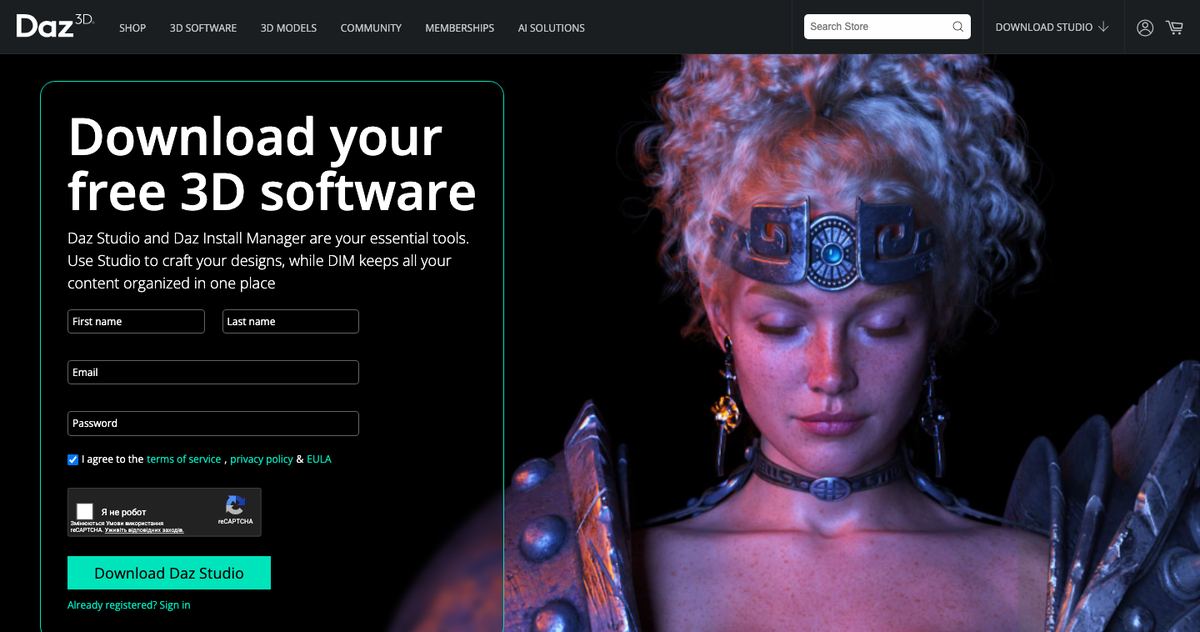
Free software with a paid content library. You buy figures, clothing and props rather than the program.
Price. The application is free, the assets are not. Site: daz3d.com.
Verdict. Choose it for quick human figures in a scene. It is a posing tool with a shop attached, not a modeller.
The best free 3D modeling software
Free no longer means limited. One of the tools below is used in production by studios that could afford anything, and two others are the fastest way for a non specialist to get a shape on screen.
Free means different things in different licences, and the difference only surfaces when you try to sell something made with the tool. The table vendors do not put on their landing pages:
| Tool | Free for commercial work? | The catch |
|---|---|---|
| Blender | Yes, without conditions | None. The GPL covers the software, not what you make with it, and your renders are yours |
| FreeCAD | Yes | None on the licence. The interface is the price you pay |
| SketchUp Free | No, the web version is for personal projects | Commercial work needs a paid plan, and export formats are limited on the free tier |
| Tinkercad | Yes in practice | Built for learning and simple parts; it will not carry a product-grade model |
| Onshape | Yes, with a large asterisk | On the free plan every document is public. Anyone can find your design. Private work needs a paid seat |
| Fusion 360 Personal | No | Personal, non-commercial only, and Autodesk enforces it |
| Houdini Apprentice | No | Non-commercial, renders capped at 1280 by 720 and watermarked |
The short version for a business: Blender and FreeCAD you can build a company on. Onshape free is fine until the day a competitor searches your product name. Everything else marked no is a trial in disguise.
Blender
Genuinely free and genuinely professional. Modelling, sculpting, UV, animation, simulation, video editing and the Cycles renderer, all in one download with no licence at all. The interface changed for the better in version 2.8 and the industry stopped joking about it.
Price. Free, open source, no catch, commercial use included. Site: blender.org.
Verdict. The default answer for anyone starting today. The only real cost is the learning curve, which is steep for a week and then fine.
SketchUp Free
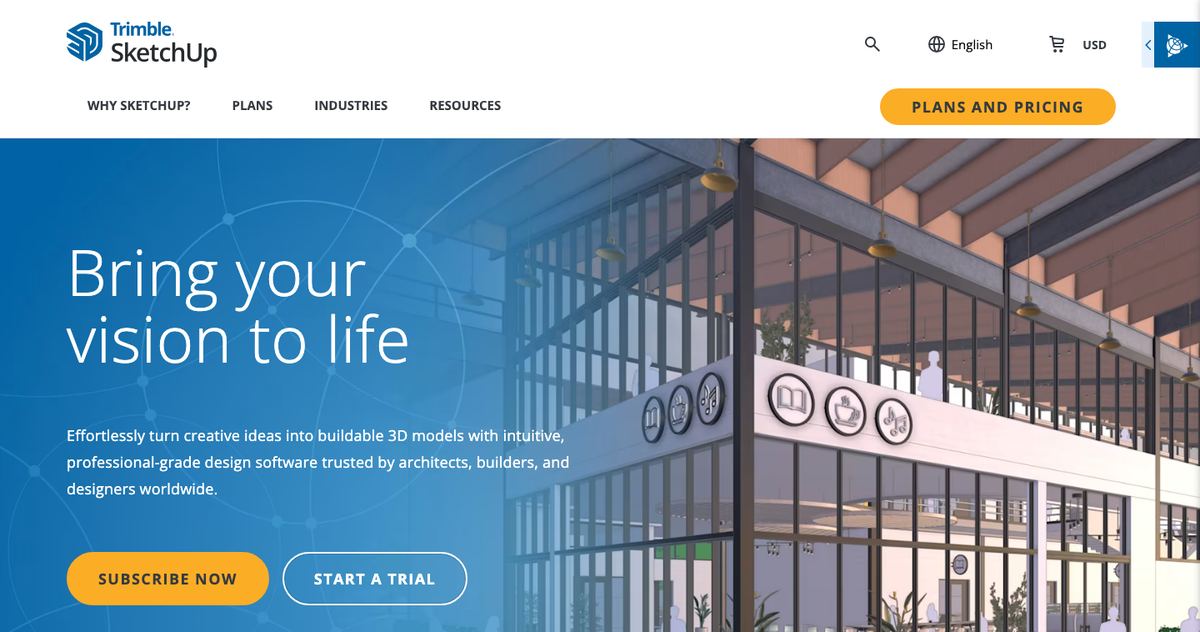
Push and pull modelling that a non modeller can pick up in an evening. The free version runs in the browser with a large warehouse of ready models behind it.
Price. Free in the browser. Desktop versions are paid. Site: sketchup.trimble.com.
Verdict. Choose it for quick architectural and furniture shapes. Not the tool for curved or detailed product work.
Tinkercad
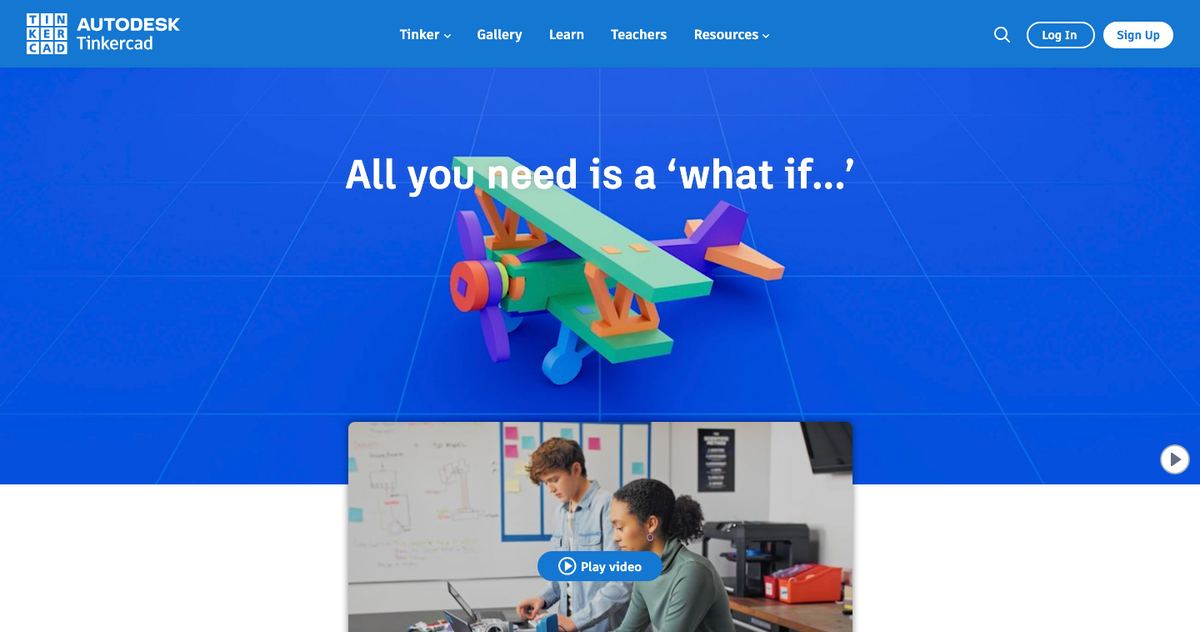
Blocks that combine and subtract, in a browser, aimed at beginners and classrooms. Owned by Autodesk, exports straight to 3D printing.
Price. Free, browser based, account required. Site: tinkercad.com.
Verdict. Choose it for simple parts and for learning what 3D modelling even is. Outgrown quickly, and that is the point.
FreeCAD
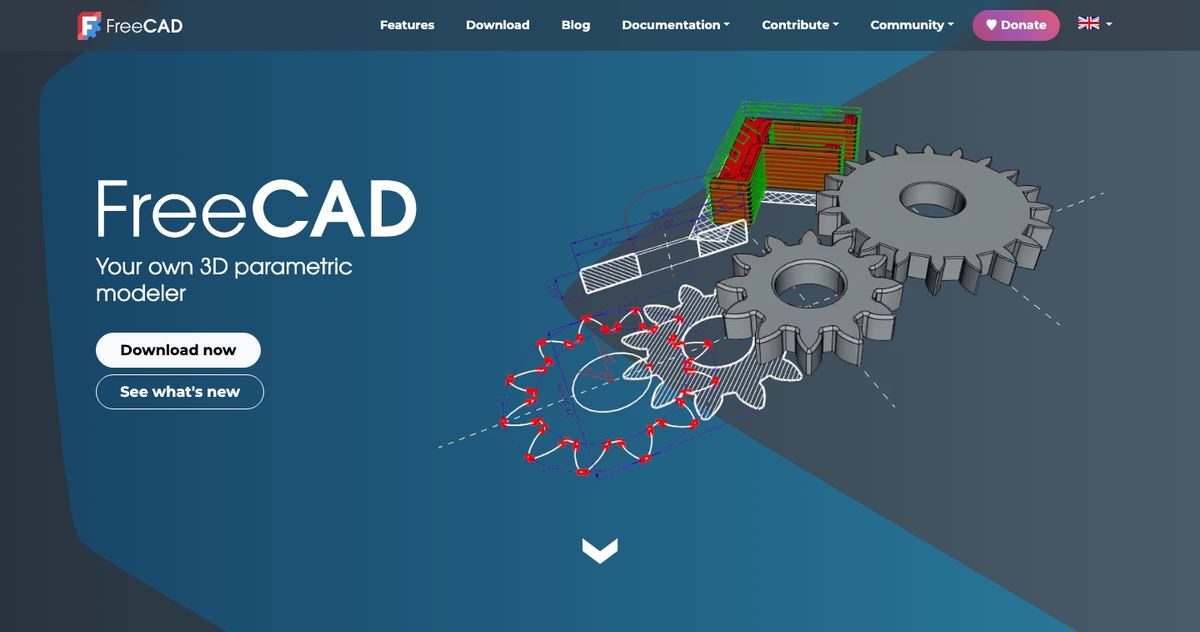
Open source parametric CAD. A real modelling history, constraints, and technical drawing output, without a licence fee.
Price. Free and open source, on Windows, macOS and Linux. Site: freecad.org.
Verdict. Choose it for mechanical parts when SolidWorks is out of budget. The interface is rougher and the workflow less forgiving.
Onshape
Professional cloud CAD that runs in a browser with proper version control, from the people who originally built SolidWorks.
Price. Free plan available. On the free plan your documents are public, which rules it out for confidential work. Site: onshape.com.
Verdict. Choose it for collaborative CAD and for working from any machine. Read the free plan terms before you put a client project in it.
Browser based tools with nothing to install
| Tool | Cost | Best at |
|---|---|---|
| Tinkercad | Free | Simple parts, teaching, 3D printing |
| SketchUp Free | Free | Quick architectural and furniture shapes |
| Onshape | Free plan, documents public | Parametric CAD with version control |
| Vectary and Womp | Freemium | Web ready visuals and quick concepts |
What browser tools give you: no installation, any machine, easy sharing, and a colleague can open the file without buying anything.
What they take away: heavy scenes crawl, the renderers are basic, plugin ecosystems barely exist, and your work lives on somebody else server. Fine for concepts and simple parts. Not where a catalogue gets produced.
Modelling on an iPad
A tablet is no longer a toy in this field, and for two jobs it is genuinely better than a desktop: sketching a shape early, and sculpting with a pencil in your hand.
- Shapr3D. Full solid modelling with pencil input and manufacturing-ready export. The same file opens on the desktop app.
- Nomad Sculpt. Digital sculpting close to what ZBrush does, for the price of a lunch, one payment rather than a subscription. Genuinely capable for organic shapes and detail.
- uMake. Curve-based conceptual modelling, aimed at designers sketching rather than engineers dimensioning.
Where tablets still lose: heavy scenes, production rendering and the plugin ecosystems. A tablet is a front end for ideas, not a replacement for the machine that renders the catalogue.
Where AI generators fit
The question turns up in every discussion of this topic now, so here is the honest answer from a studio that uses these tools daily. Meshy, Spline, Sloyd and their competitors turn a sentence or a photo into a recognisable shape in under a minute. We ran four of them on the same product and checked every result the way a studio checks an incoming model. For a mood board, a blockout or a background prop, that is a real saving and it is not going backwards.
What they do not yet produce is a model you can put on a product page. A generated mesh arrives as dense triangles rather than clean quads, with fragmented UVs, no separation into parts and no relationship to the real dimensions of the object. A commercial model has to be measurable, splittable, exportable to glTF or USDZ, and correct under any lighting. Generators satisfy none of those reliably.
So they belong in the toolbox next to reference photos, not next to 3ds Max. We use them for iteration and concepts; the deliverable is still built and checked by a person. The longer version of that argument is in where 3D modeling is heading.
What a product CGI studio actually uses
For the record, since this is the question we get asked most, here is the practical stack behind commercial product visuals.
- Hard surface modelling: 3ds Max, with CAD geometry imported from SolidWorks or Rhino when the client has it.
- Organic detail and ornament: ZBrush.
- Soft goods: Marvelous Designer for upholstery, bedding and clothing.
- Rendering: V-Ray or Corona, sometimes Cycles.
- Real time and AR: Blender for cleanup and optimisation, then glTF and USDZ export.
Note what is not in that list: a single program that does everything. Every studio runs a stack, and the model moves between tools. Materials come from photographed references and texture libraries, the seven sites we pull from are in 3D modeling and texturing resources, and the techniques the stack enables, from retopology to procedural work, are collected in advanced 3D modeling techniques. Where the tooling is heading next is in the future of 3D modeling. If you are choosing software to hire around rather than to use yourself, that is the more useful thing to know.
What you give up by going free
| Paid | Free | |
|---|---|---|
| Modelling capability | Everything a professional needs | Nothing meaningful, in Blender at least |
| Rendering | V-Ray, Corona, Redshift, Arnold | Cycles and Eevee are good, the plugin choice is narrower |
| CAD accuracy and STEP files | Native and reliable | Workable in FreeCAD, fiddly elsewhere |
| Plugins and scripts | Thousands, most of the industry builds for them | Growing fast, still thinner |
| Studio compatibility | Files open anywhere | Usually fine through FBX and OBJ, occasionally not |
| Support | Vendor support, training, certification | Forums, documentation and a very active community |
| Learning material | Vast | Vast, and mostly free |
Honest summary: for learning, for freelancing and for most product work, Blender costs nothing and loses you nothing. Paid software wins when you need CAD accuracy, a specific renderer, or file compatibility with a studio or manufacturer that has already standardised on it.
If the reason you are comparing software is that you need product visuals rather than a new skill, we do that part. Our 3D product modeling services cover it end to end: you send drawings or samples, we send back the model and the images.
Software is the easy half of the decision. What the software is used to do is covered in our guide to what 3D modeling is.
Frequently asked questions

Ian Diev
Content Writer, Editor
Ian loves writing about innovative 3D technologies and their impact on architecture and design. In his spare time, he makes indie music, watches obscure movies, and cooks culinary masterpieces for friends.
7 Comments on “3D MODELING PROGRAMS IN 2026: WHICH TOOL FITS WHICH JOB, FREE AND PAID”
Very nice collection. I personally use 3Ds max, maya and zbrush some times I use marvelous designer also . In future I hope to try others software you put on the list. Thanks a lot for sharing
Thanks for sharing this info!
ZBrush’s the one for me) Though I’m planning to learn Maya too
Agree with every point!
Nice list!
Great list! Thanks for your work!
Autodesk Maya, 3ds Max , Zbrush and Mudbox are great industry standard software for Modeling and Sculpting . I use Maya for Modeling , Zbrush For sculpting , Substance Painter for texturing , Marvelous designer for Clothing Marmoset toolbag for Rendering .